What It’s Like to Be a Police Chief at a Landscape Painting Workshop
Why the outsider often learns the most
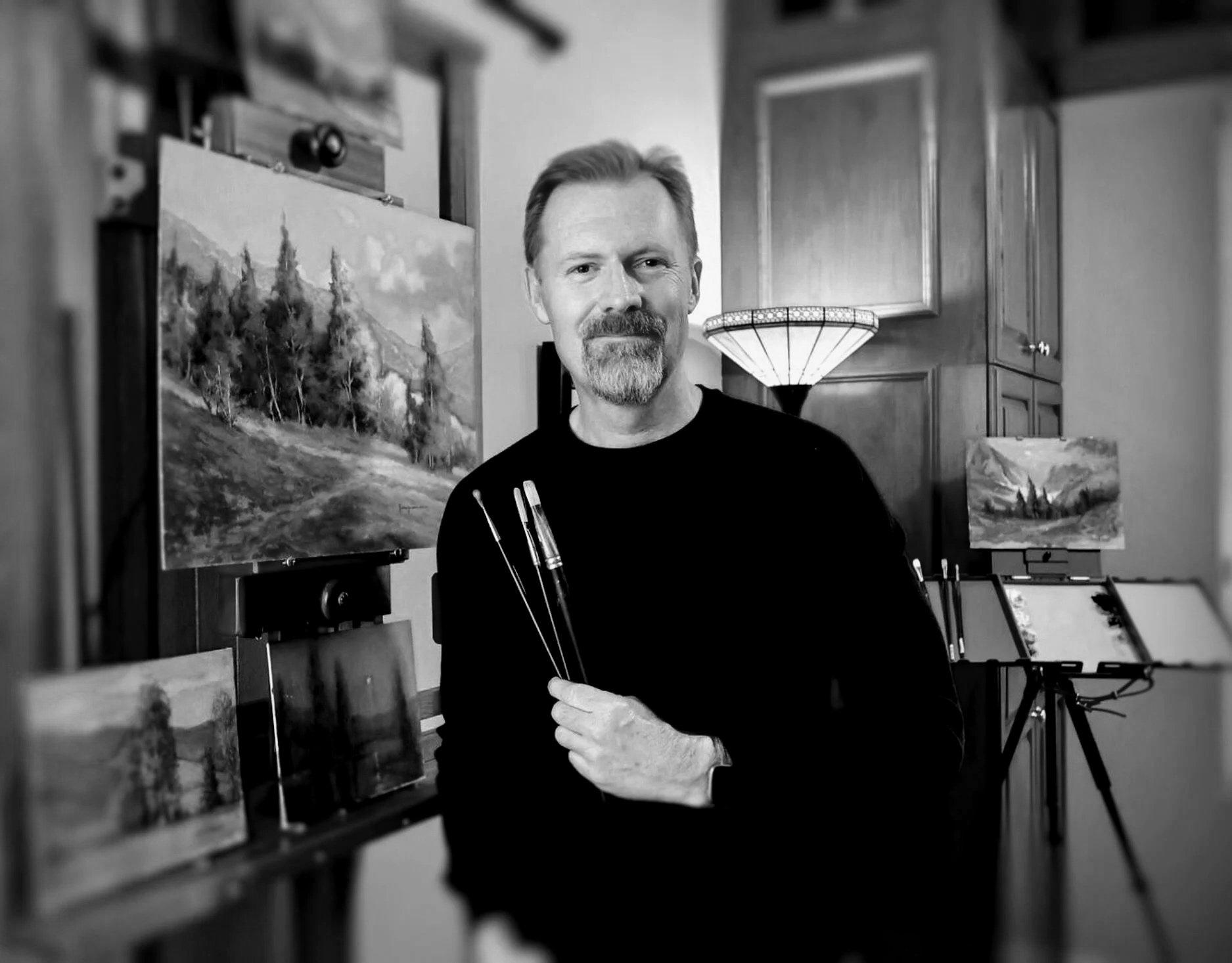
Self-portrait of me in my studio
“I’m John,” I said when my turn came. “I’m a police chief. I paint nights and weekends when I can. I’m here to get better.”
A few people smiled.
The introductions continued around the room. One artist worked for Pixar. Another made his living painting for galleries. Others taught workshops, illustrated books, or worked in advertising. Nearly everyone seemed to have spent years making art.
I listened and wondered what I was doing there.
The workshop was held on acclaimed landscape painter Scott L. Christensen’s property outside Driggs, Idaho, in a large outbuilding converted into a studio.
Scott’s paintings hung on the walls. A Hughes easel and painting desk on wheels sat in the front of the room, beneath bold lights. A whiff of solvents hung in the air. Everywhere I looked were people who seemed to belong.
I did not.
I wasn’t a professional artist. I wasn’t represented by galleries. I had no exhibitions, no collectors, no impressive résumé.
I was a police chief who painted because it quieted my mind.
Not long before, I’d discovered Scott’s work in an art magazine. His landscapes had a confidence I admired, loose where mine felt stiff, simple where mine felt overworked. And there was another reason I was drawn to him.
Before painting became his life, Scott had been a football player until a devastating neck injury ended that dream. His path to art wasn’t conventional.
Neither was mine.
The idea of attending one of his workshops had seemed almost ridiculous. I discussed it with my wife.
“I ought to take vacation and go paint with Scott Christensen,” I joked one evening, expecting her to laugh.
“You should.”
“I hate flying.”
“So?”
“It’s expensive.”
“It’ll be worth it.”
“I can’t just disappear for a week.”
“You can.”
One by one, she dismantled every excuse I offered until there weren’t any left. A few weeks later I found myself hauling a travel backpack full of paints, brushes, and canvases through airports, enduring white-knuckled flights that ended on a tiny commuter plane descending into the Teton Valley.
I came to Idaho hoping to become a better painter. I left with something much more valuable.
Simplify the Complexity
The first morning, Scott gathered us around his easel and painted a shallow stream where autumn leaves drifted across the surface like little boats. His brush seemed to know things the rest of us were still trying to learn. A few strokes and water became transparent. Another few and a reflection appeared where there had only been canvas.
He painted slowly enough for us to follow, yet somehow always seemed a step ahead.
When the demonstration ended, we scattered across the property to paint. I chose a stand of cottonwoods near the pond, unfolded my pochade box, and began wrestling with shapes and masses and composition. Every few minutes Scott wandered by someone’s canvas, offered a suggestion or two, then disappeared again before they had time to overthink it.
When he stopped beside mine, he studied it for a long moment.
“You’re working too hard,” he said with a grin. “Simplify the complexity. Less is more.”
It was advice about painting. And maybe about life, too.
During lunch and the afternoon breaks, several classmates wandered over to introduce themselves. I suspect they were curious more than anything else. A police chief at a painting workshop was not something they encountered every day.
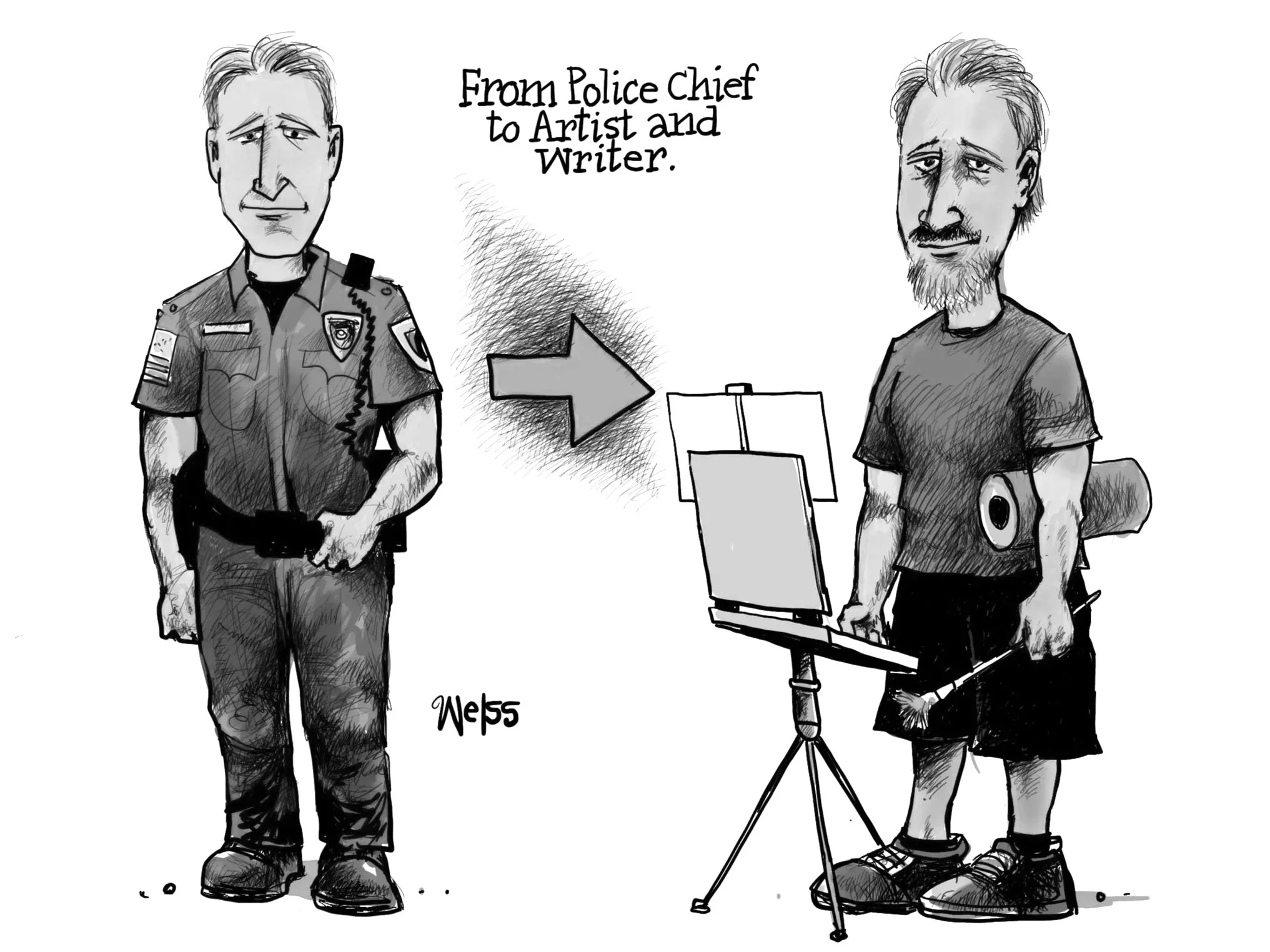
Artwork by John Patrick Weiss
Television has a way of flattening people into caricatures. The cops I knew were rarely like that. One SWAT officer I knew performed Shakespeare in plays on weekends. Another wrote poetry. Others played in bands, built furniture, restored old cars, tended gardens. Most of us had some corner of our lives that bore no resemblance to the shield we pinned on each morning.
Painting happened to be mine.
One artist in particular, James, became a friend almost immediately. He was a retired business executive, thoughtful and self-deprecating, and staying in one of the same little log cabins nearby. We’d compare paintings after class, pick up something simple for dinner, and spend the evening talking about values, color, and composition as though we’d been doing it our whole lives.
Neither of us had.
What surprised me was that being inexperienced sometimes worked in our favor. Many of the accomplished painters arrived with habits refined over years of practice. Their paintings were stronger than ours, but changing old habits can be harder than learning new ones.
James and I had very few habits to unlearn. When Scott suggested a different way of seeing or mixing color, we simply tried it.
Every evening the class gathered to discuss the day’s work. Paintings leaned against walls while Scott offered thoughtful critiques, pointing out strengths before quietly suggesting what might be improved. I admired how generous everyone was with one another.
Still, my competitive side crept in after dark.
While many of the others went into town for dinner or gathered on porches with glasses of wine, I’d carry my wet paintings back to the cabin, prop them beneath the harsh bathroom light, and keep working.
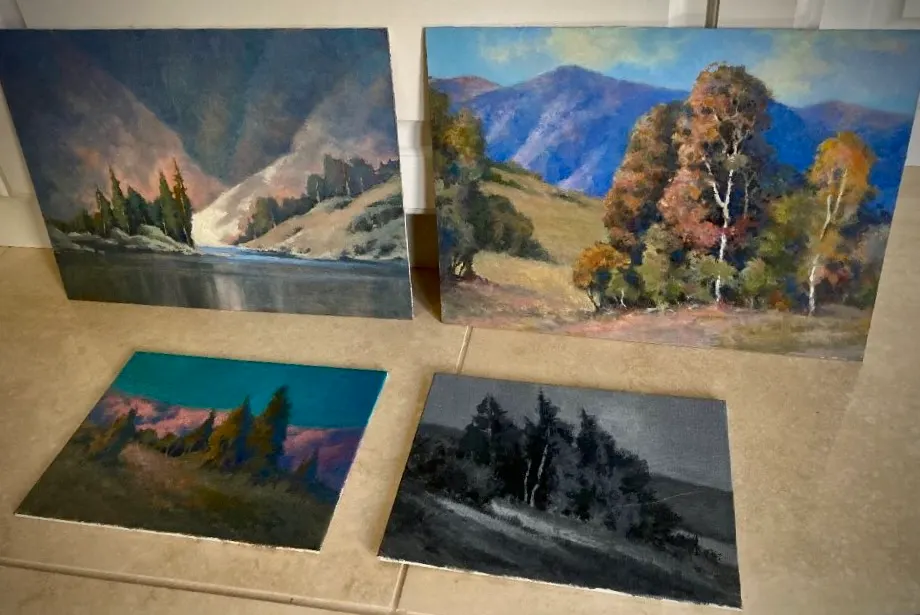
Some of my paintings
Sometimes James would stop by with takeout and we’d talk while I scraped away passages that weren’t working and painted them again. After he left, I’d stay up late refining and polishing my work.
It felt strangely familiar.
Years earlier, as a graduate student, I’d stayed awake through more nights than I cared to remember trying to earn top grades. Now I was doing much the same thing, only the textbooks had been replaced with tubes of paint and stained brushes.
By the end of the week something had changed.
I was still nowhere near the strongest painter in the room, but my work had begun to breathe in a way it hadn’t before. Scott noticed.
“You ought to come back next year for the advanced workshop,” he said. For a moment I thought he might be joking.
He wasn’t.
I Wouldn’t Trade My Life for Theirs
One afternoon a woman from the workshop struck up a conversation while we cleaned our brushes.
She was warm, curious, and genuinely interested in people. We’d talked several times during the week, usually about painting, occasionally about police work, and once about books. Near the end of the workshop she invited five of us to dinner at her home.
James and I drove together.
Neither of us knew quite what to expect. The driveway wound through tall trees before opening onto a house that looked less like a residence than an estate.
Original paintings lined the walls. Museum-quality pieces hung comfortably alongside Scott’s work as though they’d always belonged together. The cellar held more bottles of wine than most restaurants, and dinner was served with the grace of people accustomed to welcoming distinguished guests.
It was an extraordinary evening.
Our hosts had entertained presidents, artists, business leaders, and many other luminaries. Yet they treated the five of us no differently. Conversation drifted from painting to literature to history. No one hurried it along.
Driving back to our cabins beneath a sky crowded with stars, James laughed softly.
“Well,” he said, “that was something.”
And after a few quiet miles he said something else.
“I wouldn’t trade my life for theirs.”
Neither would I.
The evening had been beautiful, but it also clarified something. Happiness isn’t measured by the paintings hanging on your walls or the wine in your cellar.
For me it had always been simpler than that. Good health. A family I loved. Dear friends and meaningful work.
And a paintbrush waiting for me after the rest of the world had gone to bed.
We Belonged All Along
I still have paintings from those workshops.
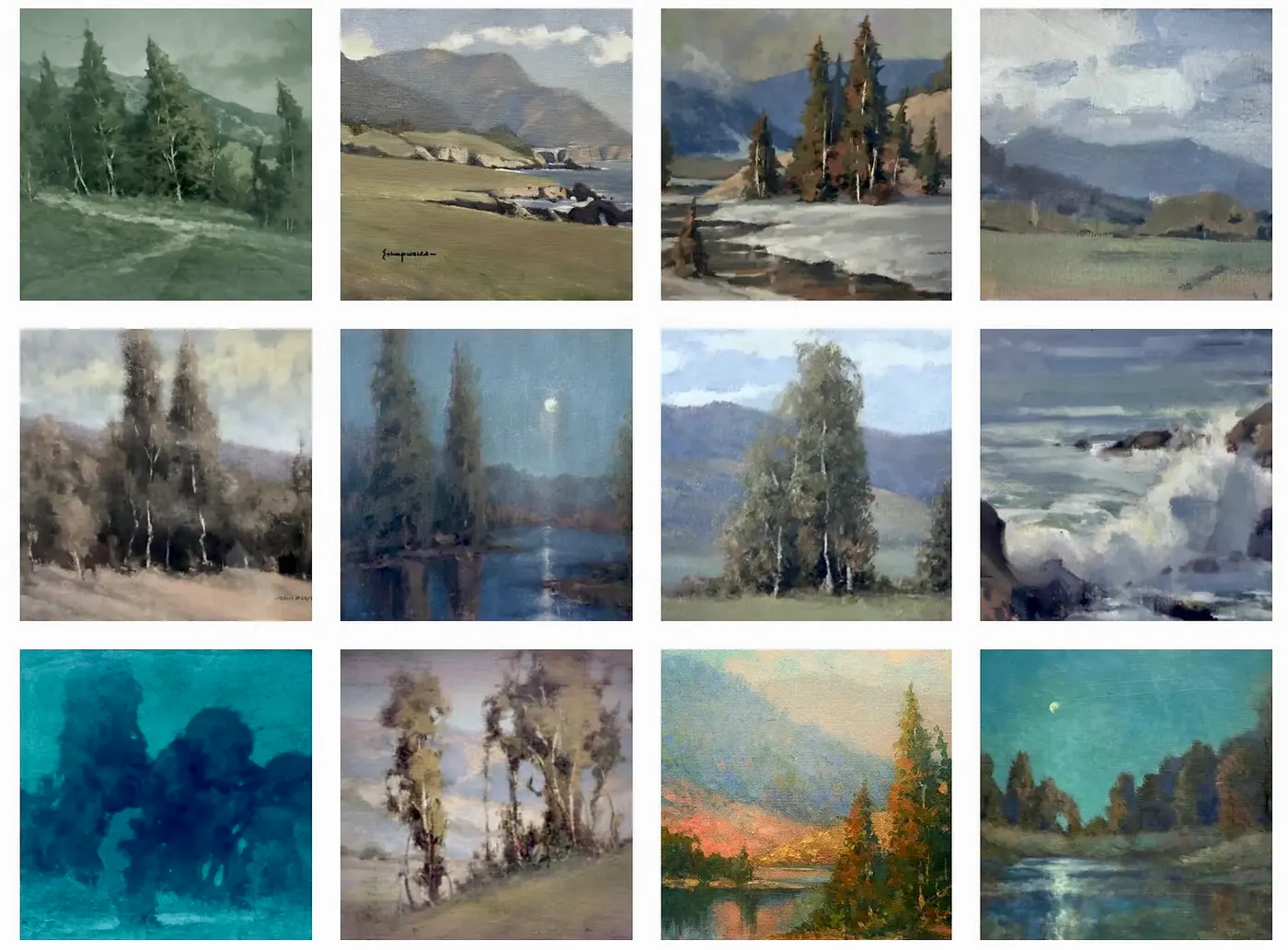
Paintings by John Patrick Weiss
When I look at them now, I don’t see perfect compositions or flawless brushwork. I see a police chief who was afraid to fly, certain he wasn’t good enough, carrying a box of paints into a room where he knew no one.
I’m grateful he listened to his wife and flew to Idaho.
Every worthwhile thing I’ve learned has begun the same way. By walking into a room where I didn’t quite belong. Or thought I didn’t.
Sometimes that’s where we discover we belonged all along.
(Originally published in Mind Cafe on Medium)
Weiss Journal is free. No subscriptions or paywalls. I rely on voluntary donations to keep this creative enterprise going. Funds cover online expenses, books, and cat treats. If you enjoy the work, consider a small donation of any amount via secure PayPal. I appreciate your kind support.
I also accept Stripe.