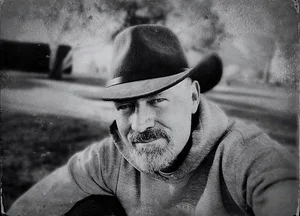
The Resurrected Eye
The concrete bulk of Japan Center sat low against the grey coastal sky of San Francisco. We fled the damp air and entered through glass doors to the smell of toasted sesame oil and boiled pork and something akin to old paper. Like the scent of forgotten books.
Inside, a sprawling labyrinth of aggregate stone and iron windows held pockets of light and shadow. We ambled down a hallway to a subterranean maze of storefronts. Neon tubes hummed in the recessed ceilings, casting a cool glare across the linoleum floors.
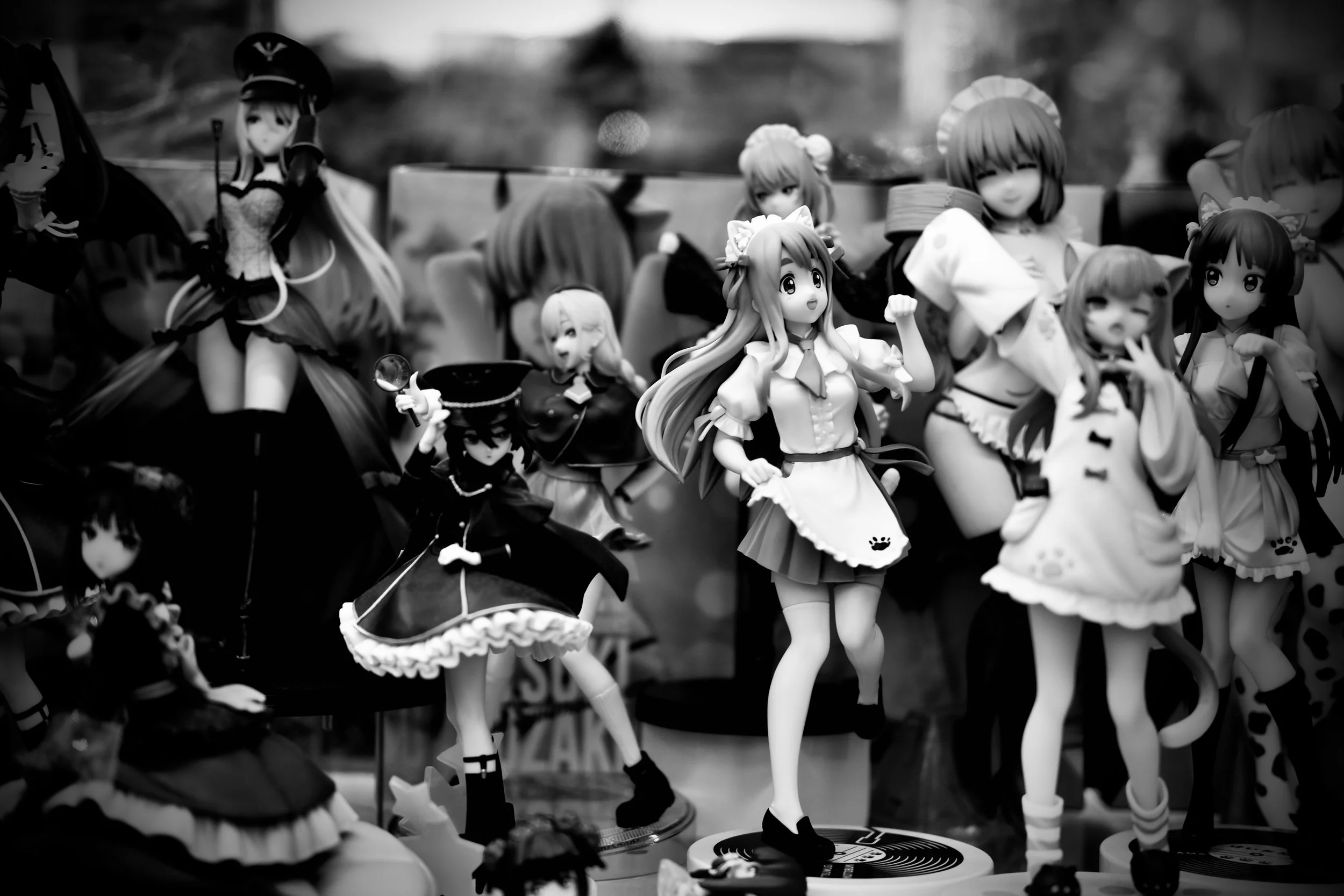
Small shops stood open to the hallways, their shelves crowded with trinkets and little collectibles. One shop held a shelf of oddly sexualized dolls, their purpose and intended collectors beyond my knowledge.
We strolled into the bookstore where thousands of black-inked volumes lay stacked, the characters on their spines inscrutable and geometric. I found some photography books. One had been left on top of the others, splayed open to reveal gritty, high-contrast, blurry black-and-white snapshots of Tokyo.
Daido Moriyama, I said to myself. The grandfather of Japanese street photography.
We bought a few books and made our way down the sloping hallway toward the food court. Men and women sat at small laminate tables, their heads bowed over steaming bowls of broth, lifting noodles with wooden sticks.
We were tempted to eat there, but had plans to dine with friends in a few hours.
So we ducked into a little shop. My wife explored the colorful garments while I lifted my rangefinder camera to capture a few snapshots. I wanted some images to remember this culturally rich corner of Japan Town.
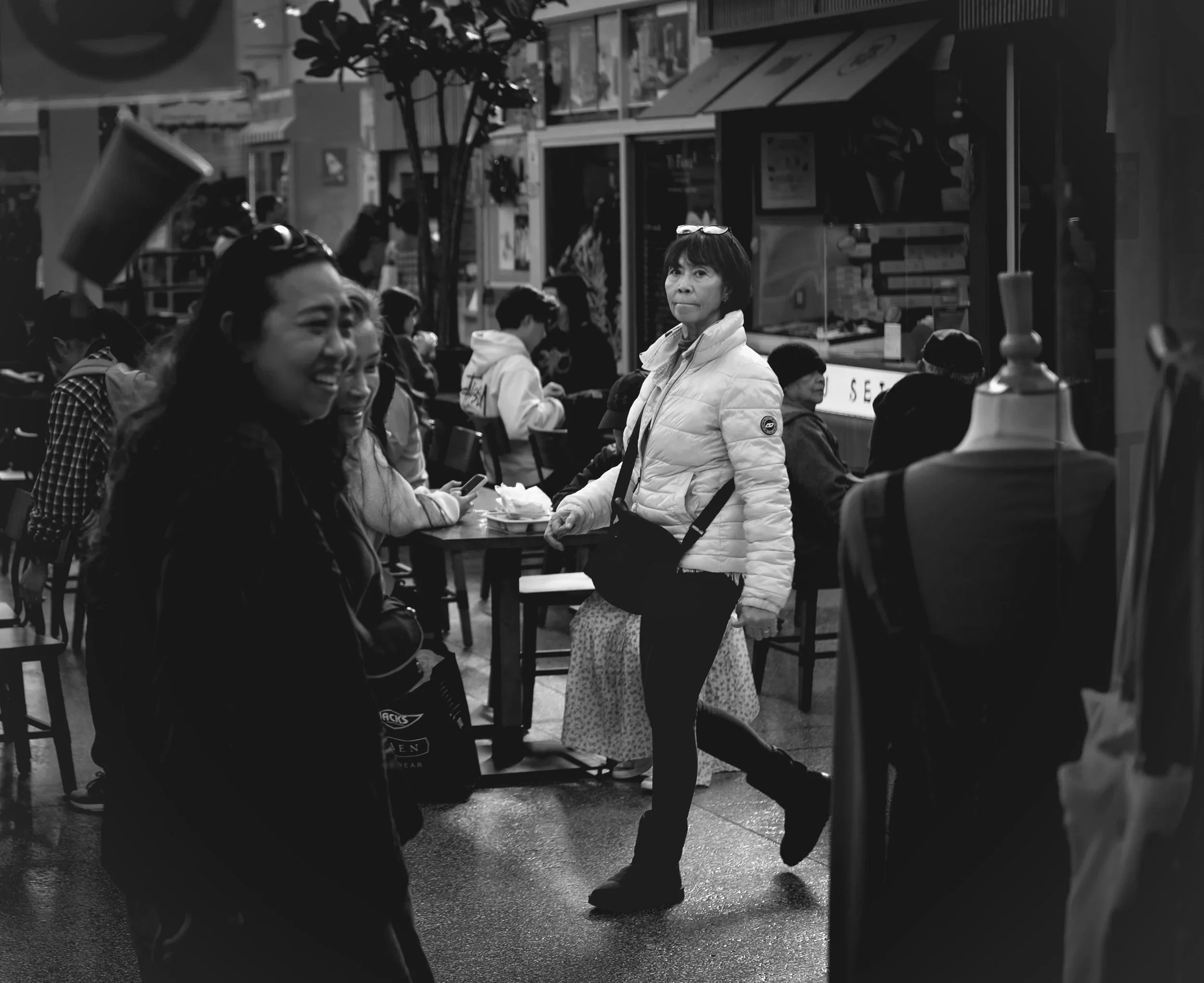
The low light made getting a good exposure tricky. Then a woman in a bright white puffy jacket caught my eye outside the shop. I raised my camera, looked through the viewfinder, and pressed the shutter just as she looked directly at me.
I suppose awareness is a two-way mirror.
I immediately smiled, having learned with street photography that friendliness can dampen suspicion and alarm. The woman returned a half smirk and then disappeared into the crowd.
My wife purchased something in the shop, and we made our way back outside. All around us came the roar of car engines, sirens, and footfalls on concrete sidewalks. The hiss of industrial kitchens venting steam could be heard in the distance.
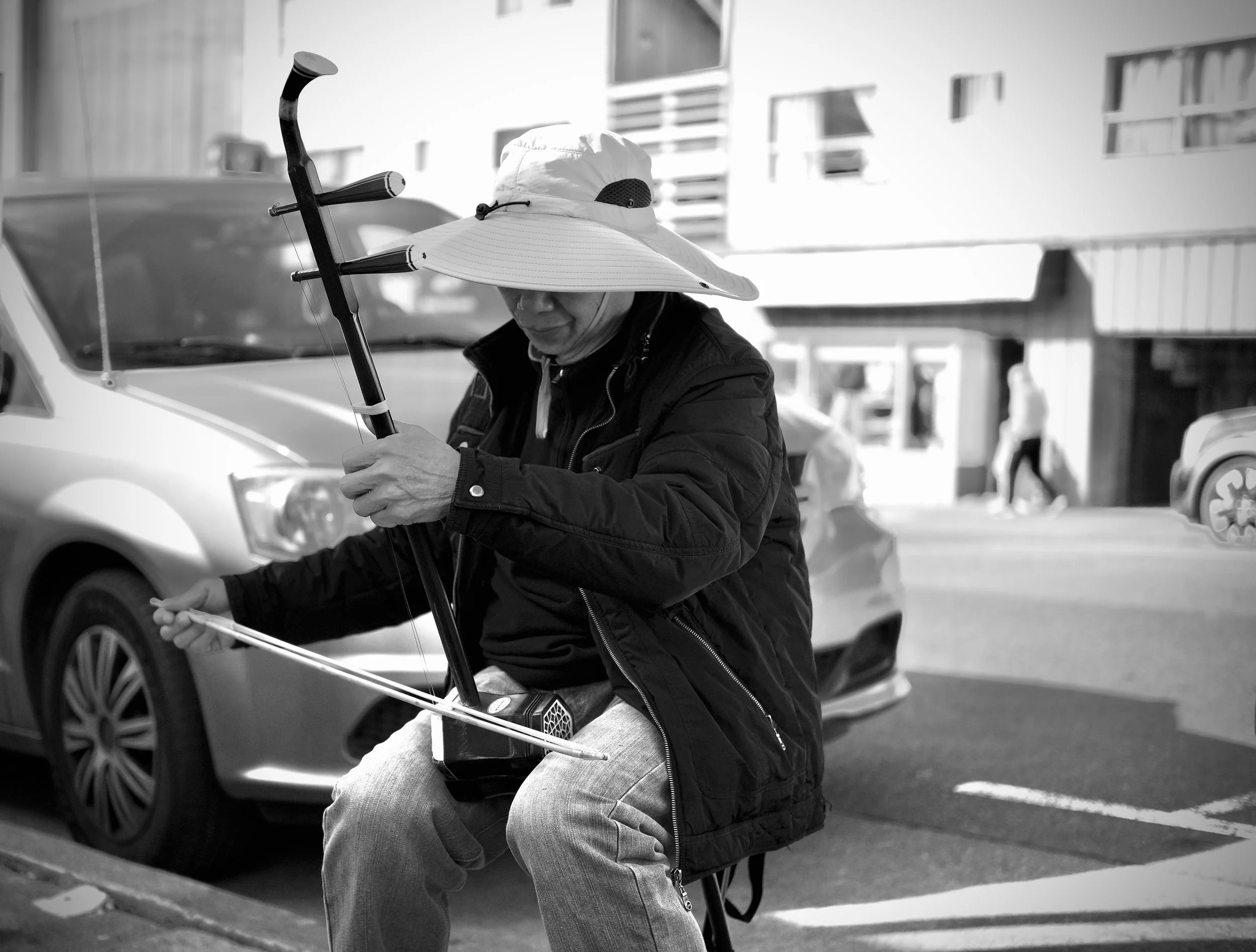
We turned a corner and an elderly gentleman was playing a musical instrument unfamiliar to me. I tossed a few bucks in his tip container and held up my camera, and he nodded affirmatively.
We enjoyed dinner with our friends, and took our time walking back to the hotel.
Later that evening, lying in the bed, I reflected on something I thought I’d lost. But now it was back.
Only it was different.
Back in my rookie police officer days, my FTO (field training officer) and I were driving down a dark residential street during graveyard shift.
My FTO looked over at me.
“What’s wrong with this picture?”
I scanned the street in front of us. Just a row of houses. A few cars in driveways. One car parked way down the street. Nothing remarkable stood out to my inexperienced eyes.
“I don’t see anything unusual,” I said.
“Nothing?”
“Not really. Looks pretty quiet.”
I didn’t know what else to say.
“Ask yourself why that one car parked so far away from all the houses. I mean, if you live here, or even if you’re just visiting, why not park in a driveway or along the street in front of the house?”
“I don’t know. Maybe there’d been a party earlier and all the spaces were taken?”
“Nope. We drove by here earlier tonight. No party. And that lone car wasn’t here then.”
“Maybe some teenage kid is trying to sneak a visit with his girlfriend?”
“Better. But here’s what I’ve come to learn. Burglars like to park out of the way so they don’t draw attention to themselves. But, unwittingly, they do draw attention to themselves.”
“Unwittingly?”
“Yeah. They think they’re being sneaky but they’re not.”
Just then, the two-way radio chirped. Dispatch gave us a report of a prowler.
We radioed for another unit and eventually found our burglar. He’d cut through the woods, and one of our officers who had hung back to surveil the lone car, intercepted him.
The burglar was empty-handed, but a witness came forward and identified him as having been in a neighbor’s backyard. We arrested him for prowling.
Training and experiences like this help develop what cops sometimes call their radar. That peculiar ability to sense when something is amiss. To notice behavior that doesn’t quite fit.
But in the years after I retired from law enforcement, like any skill, my cop radar began to diminish. Or maybe it just fell into a benevolent neglect. Because the longer you’re out of uniform, the easier it is to become complacent.
To stop looking so closely.
This is why that day in San Francisco, and the many other photo walks I’ve taken since then, awakened something in me.
That old cop radar, but it’s different now.
Back then, awareness had everything to do with tactical survival. It was about staying safe and getting through my tours of duty unscathed. I was constantly scanning for danger, for behavior that didn’t belong, for the small irregularities that might signal trouble.
Now I’m cultivating a different kind of awareness.
Instead of calibrating myself for criminality, I’m honing an eye for art, empathy, and connection. Noticing used to be a survival skill, but now it has become the foundation of my writing and art.
I’ve moved from suspicion to curiosity.
Instead of looking for burglars, I’m looking for humanity. And because the camera forces me to slow down, I see so much more.
Like the tender way a woman tended to her disabled companion at a sporting event. Bringing her companion something to drink. The two of them sharing a laugh.
Things that might have passed unnoticed before.
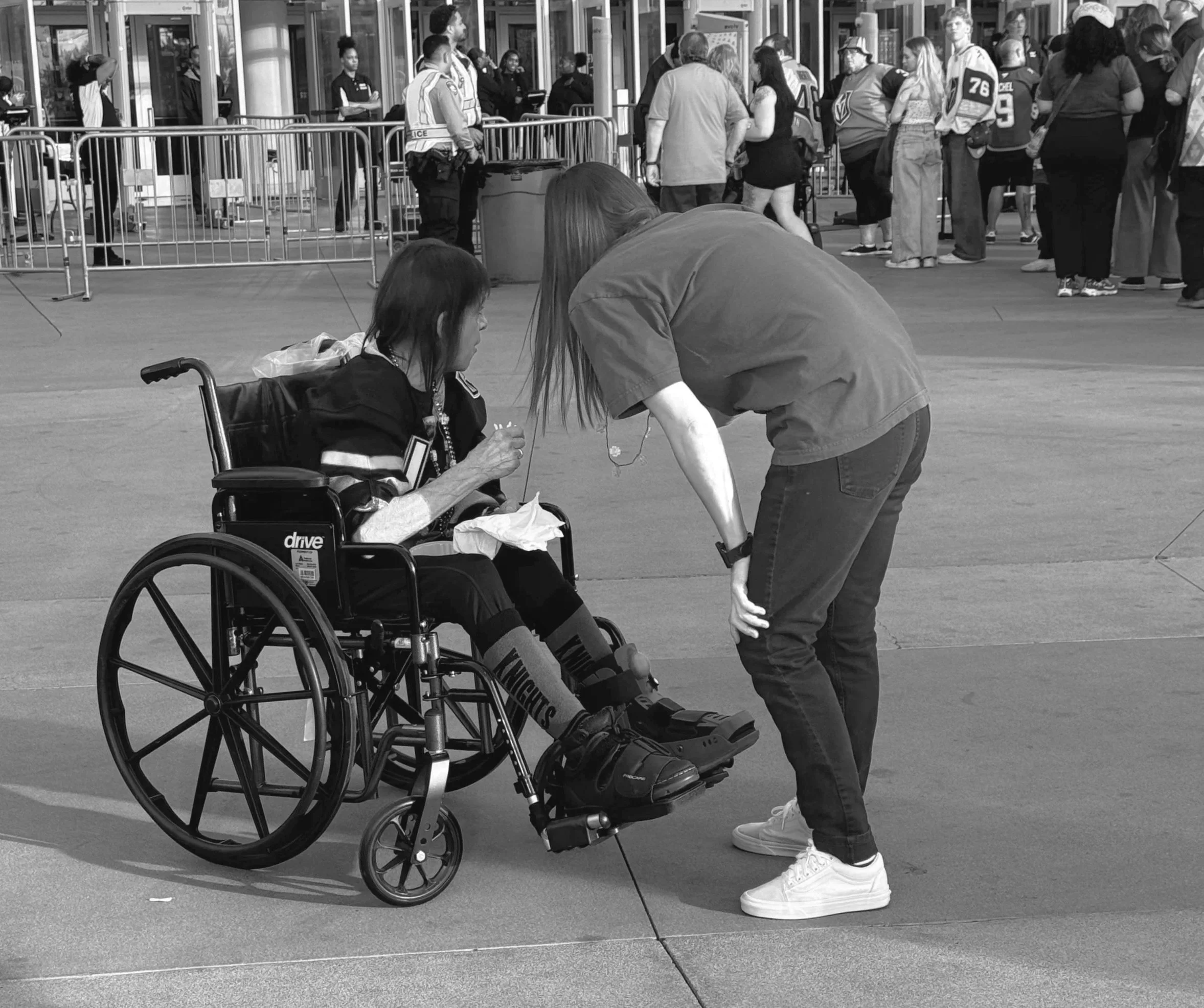
Street photography rescued me from the dormant years after I retired from police work. Picking up a camera and capturing candid moments gave me something I didn’t realize I had lost: the eye I once relied upon.
The resurrected eye.
The old ability to notice suspicious activity and hidden intentions has returned, but transformed. What was once tactical awareness has become a creative practice of presence, patience, and curiosity.
Perhaps that’s something we discover as we grow older. The skills we thought belonged to another life aren’t necessarily gone. Sometimes they are simply waiting for another purpose.
I used to patrol the city in uniform, looking for suspicious activity and criminality. Now I walk a different city, looking for art, empathy, and connection.
I scan the streets for stories about ordinary people. People who may be different from me, but who have their own hopes, disappointments, loves, and dreams. And perhaps my newfound curiosity, paired with an old rangefinder camera, will help me tell some of their stories.
Maybe that’s what the resurrected eye was waiting for all along.
(Photographs by John Patrick Weiss)