The Dignity of Small Things
A fountain pen, a jade ring, and the never-forgotten echoes of those we loved and lost
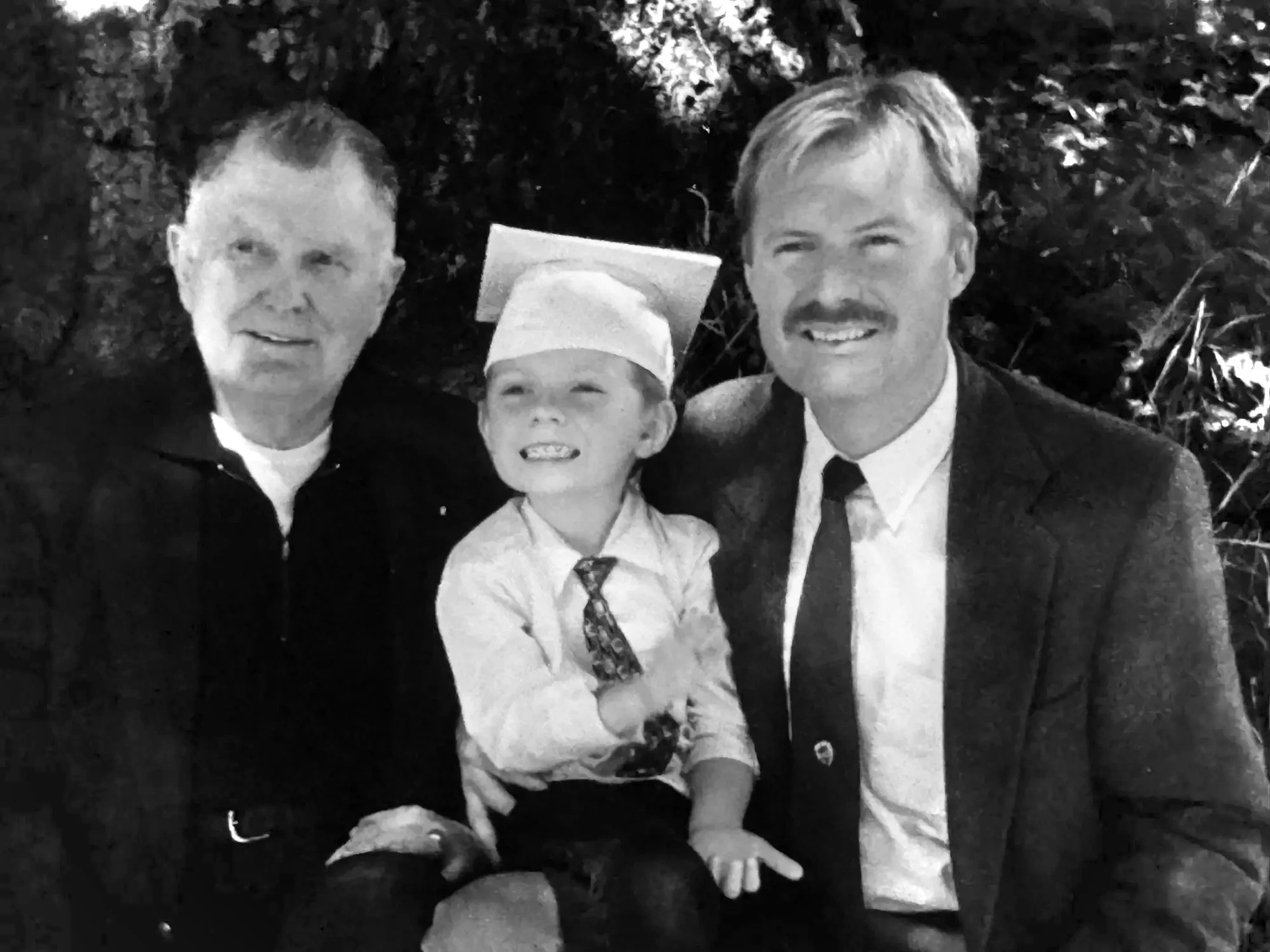
The author with his father and son
There’s an old Parker fountain pen in my collection that has seen better days.
It still looks pretty good with its silver cap and polished black lacquer body. The twin tines of its gold nib produce a satisfying line. But whenever I put the pen to paper and start scribbling, something goes haywire in the feed and unwanted specks of ink leak onto my fingers, thumb, and paper.
I had a pen guy look at it years ago and he replaced the ink piston converter, which seemed to work for a while. But eventually, the leak returned.
It’s an old pen and I have newer ones that perform flawlessly. I’ve thought about tossing the old Parker, but I never will. I still load it up once in a while to jot down ideas and doodles before the thing starts acting up.
The pen belonged to my father.
Whenever I take it for a spin, it feels like some celestial remnant of my father’s spirit manifests in the words and images scratched upon the ink-spattered page. The sound of the nib scritching across paper takes me back to boyhood days sitting on Dad’s lap. Watching and listening as his beefy hand held the Parker and produced gorgeous copperplate cursive on long, yellow legal pads.
Dad was an administrative law judge. He worked on early drafts of his legal decisions at home, sitting at our patio table surrounded by his Parker fountain pen, pencils, an ink bottle, legal pads, notes, and law books.
I’d often join him at the table and doodle in my little sketchbooks, but mostly I’d watch him think and write and move his elegant fountain pen across the long pages. Whenever he took a lunch break or went for a walk, I’d study his immaculate cursive and examine the fountain pen with its satisfying weight and shiny body.
When I turned sixteen Dad gifted me a lovely Parker fountain pen in silver.
I was so excited and I used that pen every day. For homework, letters to my girlfriend, cartoons, and random notes and doodles left on the kitchen counter for family.
But for some reason, the silver Parker lacked the magic of my Dad’s fountain pen. They performed nearly the same, but Dad’s pen was a little heavier and possessed an intangible quality.
A sort of noble stature.
Aristocratic language, perhaps, for an inanimate object. But then those old Parker pens were engineered to look stately and authoritative with their balanced proportions, gold arrows, and geometric caps.
But it was more than that.
A Residue of Life and Work and Personal Expression
The gold nib of Dad’s Parker had grown accustomed over the years to his specific hand pressure, writing angle, and speed. The tines have literally molded and reshaped themselves to fit his script style. And the resins in the pen barrel surely absorbed the oils from my father’s hand.
Psychologists sometimes talk about the “extended mind thesis.” Tools used over years to express our deepest thoughts begin to feel less like objects and more like an extension of our body, mind, and soul.
That old, leaky Parker is a physical archive of my father’s time, thoughts, and daily movements. So maybe it’s not excessive to use words like “noble stature.”
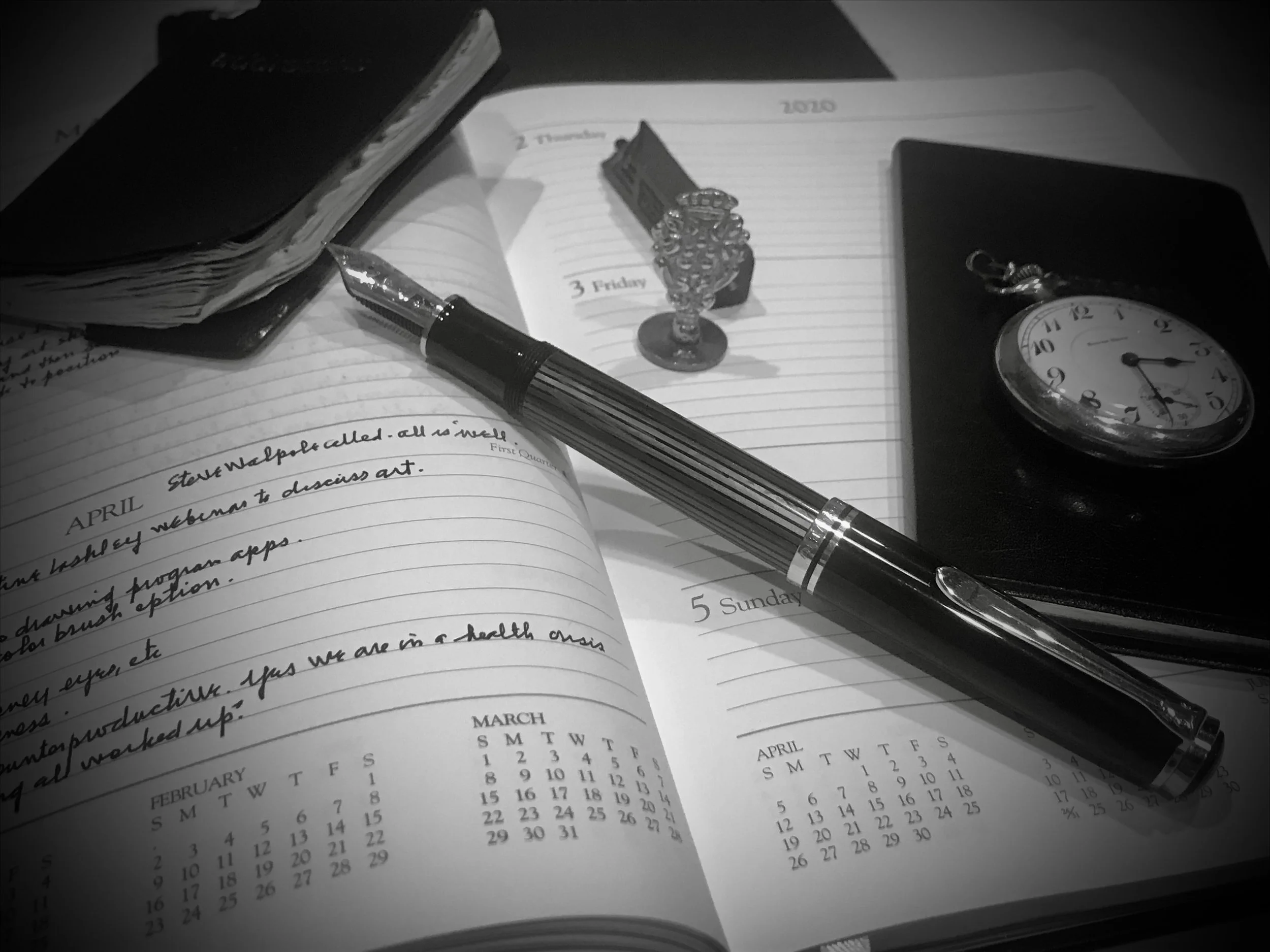
One of Dad’s old fountain pens and pocket watch
Maybe there’s a kind of inner resonance alive in the pens and rings and cherished artifacts left behind by the people we love.
The Japanese have a word for it: Tsukumogami. It’s a lovely concept from Japanese folklore, holding that tools and small household objects acquire their own spirit, aura, or even consciousness after being cared for and used for many years.
They possess a kind of patina, a residue of life and work and personal expression.
The pleasing shutter of your mother’s camera, the aroma of your father’s leather notebook, the weight of your aunt’s favorite gold brooch. All of these things trigger a tangible sense of their owner’s physical reality.
I think of it as the dignity of small things.
For a Moment, I Was a Boy Again
Speaking of small things, there was a time when my son was just a little tyke.
The day he graduated from kindergarten my father drove down for the occasion. All the children had been outfitted with cute little mortar boards to wear. My mother wanted a photo, to capture the three generations of Weiss men.
After the photo was taken, Dad reached into his sport coat and withdrew a card for my son.
He was about to hand it to him but said, “Wait a minute, I forgot to write his name on the envelope.” My son didn’t care, nor did I, but then Dad was always a formal and precise man.
He withdrew his old Parker fountain pen from his inner jacket pocket and my son and I both watched as he wrote in still impeccable cursive my son’s name and the word “congratulations” beneath it on the envelope.
For a moment, I was a boy again, entranced by the pen and paper and Dad’s elegant script.
I Felt a Deep Sense of Relief and Safety and Love
That day there was another small thing that stood out to me, beckoning childhood memories.
It was the jade ring Dad wore on his left hand (you can barely make it out in my son’s kindergarten graduation photo). After World War II my father spent time in Japan working for the Pepsi-Cola company. While he was there, he paid good money to purchase that Burmese jade ring (which he wore in place of his wedding band all his life).
During my childhood we attended Catholic mass on Sundays. While standing for portions of the liturgy, my father would rest his hands on the wooden back of the pew in front of us.
I’d stare at his jade ring with its deep, cloudy green translucence.
I remember the time I fell from a rope swing and broke my arm. Mom raced me to the hospital where they had to set it. Then Dad showed up, and the minute he walked into the hospital room and sat beside me, raising his left hand with that jade ring to brush the blonde bangs from my tearful eyes, I felt a deep sense of relief and safety and love.
Many years later, when Dad’s 84-year-old body had enough of infirmity and pain, he slipped into a deep coma and then crossed over the veil. I had been with Dad just an hour before, reminiscing about the past, holding his hands, my fingers resting on the cool surface of his beloved jade ring.
The hospice nurse phoned me when Dad died. When I met up with her later, she handed me a package with some of my father’s effects.
Including his cherished Parker fountain pen.
And his jade ring.
The Fading Yet Never-Forgotten Echoes of Those We Loved and Lost
A few years later I had the ring appraised.
“This is high quality Burmese jade,” the jeweler said. “I think you could get ten thousand dollars or so for this.” When he said those words, I recalled my father telling me to hang onto the ring after he was gone. That it could come in handy if I ever found myself in a bind and needed some cash.
And there were a few binds in the years that followed.
There were times when money ran tight and juggling a mortgage and car payments and all the rest stretched me thin. I’m not proud to say that more than once I plucked the old jade ring from my safe and held it up to the light.
Ten grand would have come in mighty handy.
But every time, as the jade reflected the lamplight and I felt the heft of the ring in my palm, I’d close my eyes and see it on my father’s ring finger. I’d see him leaning against the wooden church pew, or stroking my hair in the hospital. Or at my son’s kindergarten graduation, holding the envelope that contained a gift card as he wrote across the surface with his Parker fountain pen.
And every time, I’d place the jade ring back in the safe.
This is the dignity of small things. The quiet resonance cherished objects acquire through the lives that shaped them. They carry us back to the people we love, who continue to live, however faintly, in memory.
Organizers speak of simplicity and influencers champion minimalism. But there are some things, small things, whose dignity and history and perennial spirit stay with us always.
The dignity of small things is found in their ability to conjure the last spiritual vestiges, the fading yet never-forgotten echoes of those we loved and lost.
The dignity of small things is how we remember, where we find strength when life gets hard, and why we safely archive cherished objects for those who come after us.
My kindergartener is 28 years old now.
He knows his way around a quality fountain pen. His own hand rivals the impeccable cursive of my father’s. I don’t know, especially in this digital age, if he’d have much tolerance for a leaky old Parker.
But I’m going to leave it in the safe for him, along with Dad’s jade ring.
(Originally published in Mind Cafe on Medium.com)
Weiss Journal is free to read, with no subscriptions or paywalls. If you’d like to support my work, how about buying me a coffee?