I’m Not Afraid of Storms
by John Patrick Weiss
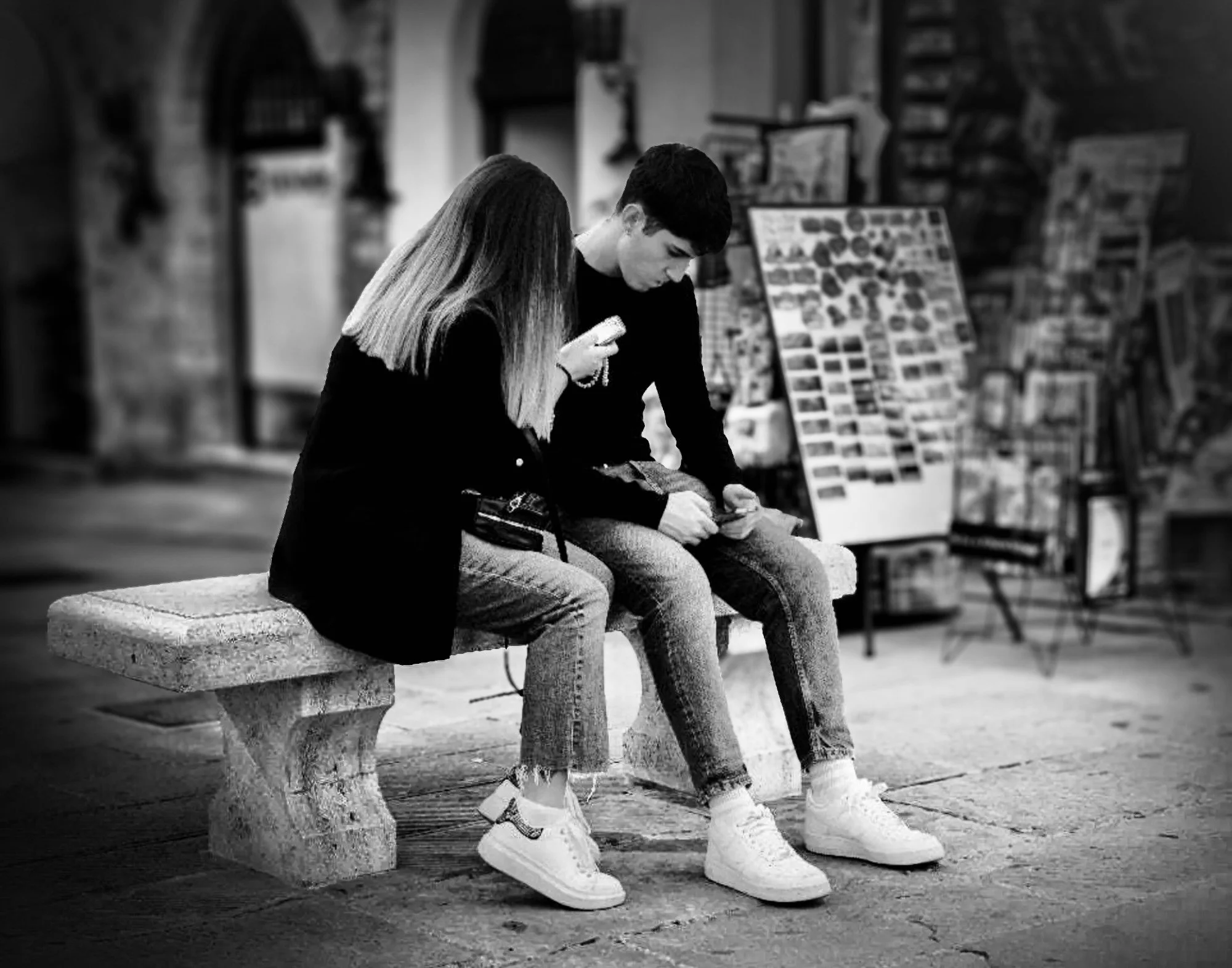
They met like a lot of people do, in the early rhythms of life when youth and beauty are in full bloom and there's little else to do but celebrate every tender moment and bask in the promise of life's unfolding goodness.
But if it were to last, there had to be some considerations worth addressing. Among these were the boy's job prospects and the girl's heart condition.
Life is cruel and beautiful and mysterious in these things.
But they didn't really care about any of that. All they cared about was the path forward. Crafting a life together, young though they were. Starting a family. And so on that autumn day, as the sun fell low over the horizon and the first chill of evening air descended into the piazza, they crafted a plan.
The boy would approach the girl’s father. Tell him how he felt. That love and destiny are powerful things, and that the universe in all its conspiratorial wisdom doesn’t fret about money, career prospects, or the dull minutiae of housing and health care and status.
The only thing the universe cares about, in the boy’s youthful estimation, is love.
And so, to summon courage that following week, the boy ambled down cobblestone alleys to his uncle Antonio’s quiet enoteca. He bought a bottle and shared it with his uncle.
“We’re in love and we’re going to marry,” he said.
“Bellissimo,” his uncle said, lifting the wine bottle to refill their glasses.
“I don’t care what her father says. I don’t care about our age. He’ll just have to accept it.” The boy drank down the rest of his wine.
“But she is not well?”
“She is fine, uncle. It’s just a little hitch in her heart. The beats are off. Maybe love does that? The pitter patter of romance!” the boy said with a smile.
“Maybe,” his uncle said.
The girl’s father ran a floral shop. In the afternoons, he let an employee take over so he could play his accordion and sing for tourists. He’d sit by shops and motorbikes at the entrance of his favorite cortile, where tourists enjoyed the flowers and soothing babble and purl of the fountain waters.
He dressed impeccably, which seemed to delight foreigners and earn him more tips. It also made him feel better about himself, having never gone to university or achieved the kind of success his entrepreneurial brother found in the shipping business.
The boy waited in the shadows until the old man put his accordion down to take a break.
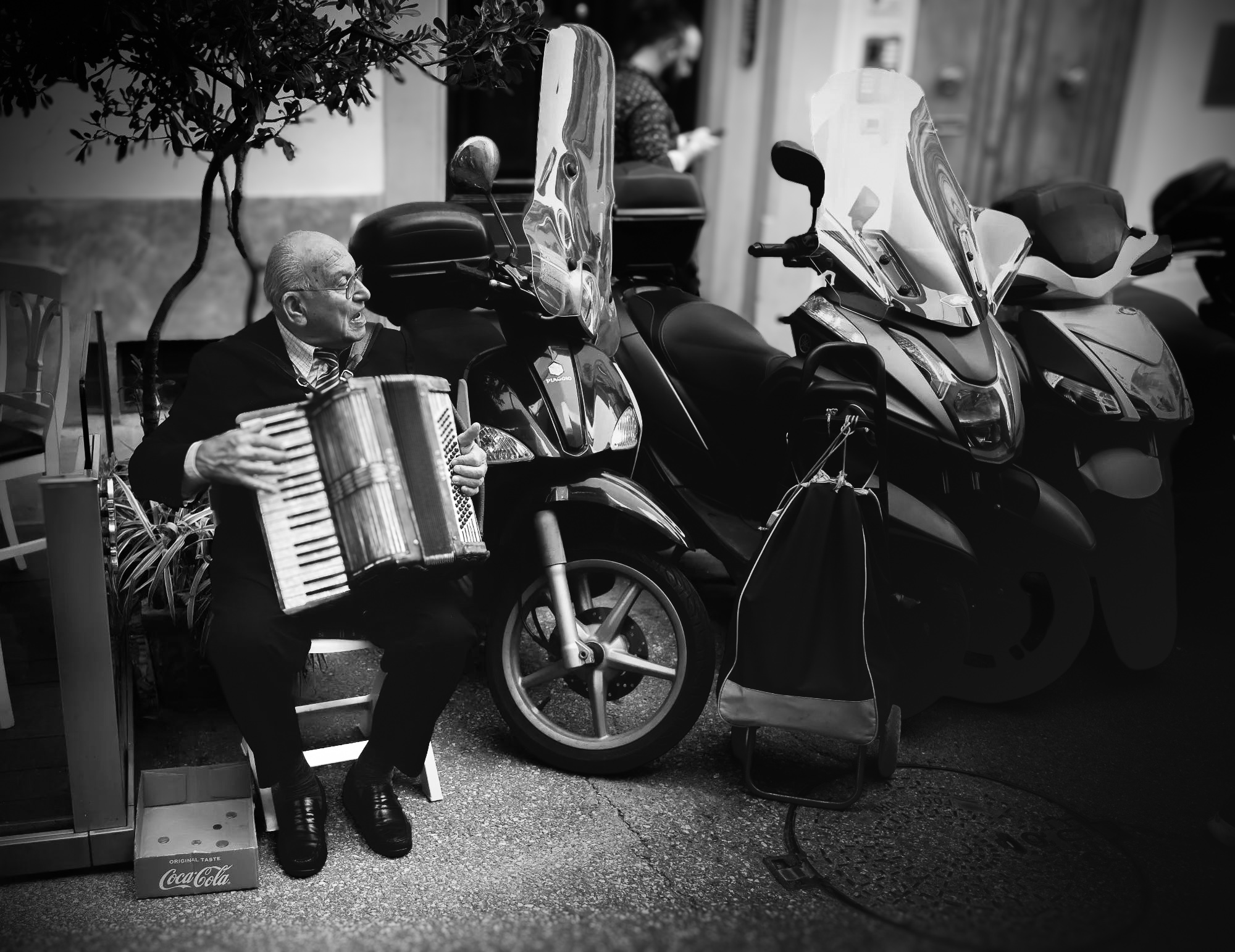
Emboldened by the wine, he tossed a little money in the old man’s Coca-Cola box. To steady himself, he took a deep breath and exhaled slowly.
“Signor Ferrari, may I have a moment of your time?” The boy loved their family name, even though they held no relationship to the iconic sports car.
“Of course my boy, join me.”
“Just a few coins?” the boy said, motioning toward the cardboard donation box.
“It’s late. Who needs money when we have sunshine and flowers and coffee.”
“I agree, there are more things in life than money.” The boy felt an opening, a way into the delicate subject of marrying the man’s young daughter.
“Indeed,” the old man said, sensing this was not just a random visit.
The boy looked down at his hands, and then into the old man’s eyes. “I’d like to marry your daughter, Signor Ferrari. I know we’re young. I know she’s fragile. But there it is.” His heart was beating very fast.
The old man leaned back.
He ran his hand gently over his balding pate, as if smoothing away nascent ripples of tension. Then he fanned his hand back and forth over his polished leather loafers, dispersing imaginary sun motes.
“I was twenty-four when I married Concetta. But even then, we weren’t ready.”
“I understand, Signor Ferrari, but you see, love has quite governed my soul.”
“Ah, Dante’s La Vita Nuova. I recognize these words, my boy. I’m a lover of books too. But marriage is far more than reciting great literature.”
“I am a writer, signore. The lessons of literature are what brought me to this decision. And if you give me your blessing, I promise I will devote my entire life to your daughter’s happiness and well-being.”
“I have no doubt you would try, but her happiness hinges on many things. Especially her health.”
“Happiness begets good health, does it not?” the boy said.
“Yes, but happiness is a fickle thing. It comes and goes. Meanwhile, life happens in all its complexities, catastrophes, and sorrows. You are healthy and strong. You can weather such trials, but my daughter is delicate. The less upheaval and excitement, the better.”
“What’s that old line about ships? They’re safest in harbors, but that’s not what ships are built for,” the boy said.
“True, but if the ship’s engine is weak, the harbor is probably the safest place.”
With this, the boy knew that the old man would not give his blessing.
“It didn’t go well,” he told her.
“My father is protective and stubborn. He’s wonderful and loving, but he treats me like a wounded bird,” she said.
“What are we to do? Your dad will never give his blessing.”
“We’ll elope,” she said.
Thus began a turbulent period in their lives. A time of excitement and pain, joy and sorrow, hope and despair. Many years later, the boy would look back on this time and smile. Sometimes there were tears, but always gratitude and the healing knowledge that they had done the right thing for everyone involved.
Especially for the girl’s father.
The girl once spoke to the boy about her late mother, who had taught her how to garden and cook and paint lovely landscapes in watercolor.
“When I was little I collapsed by the geraniums and Mamma came to me,” the girl said. “I began to cry and she stroked my hair and said how brave I was.”
The girl continued telling the story, as if reading from a book.
“I don’t feel brave, Mamma.”
“But you are, my dear, I listen when you talk about the future. The way you greet each day. Your optimism and courage. Even when the water’s rough, you have steady sea legs.”
“Steady sea legs? But Mamma, I’ve never been on a boat.”
“Then, my child, we must do something about that. ”
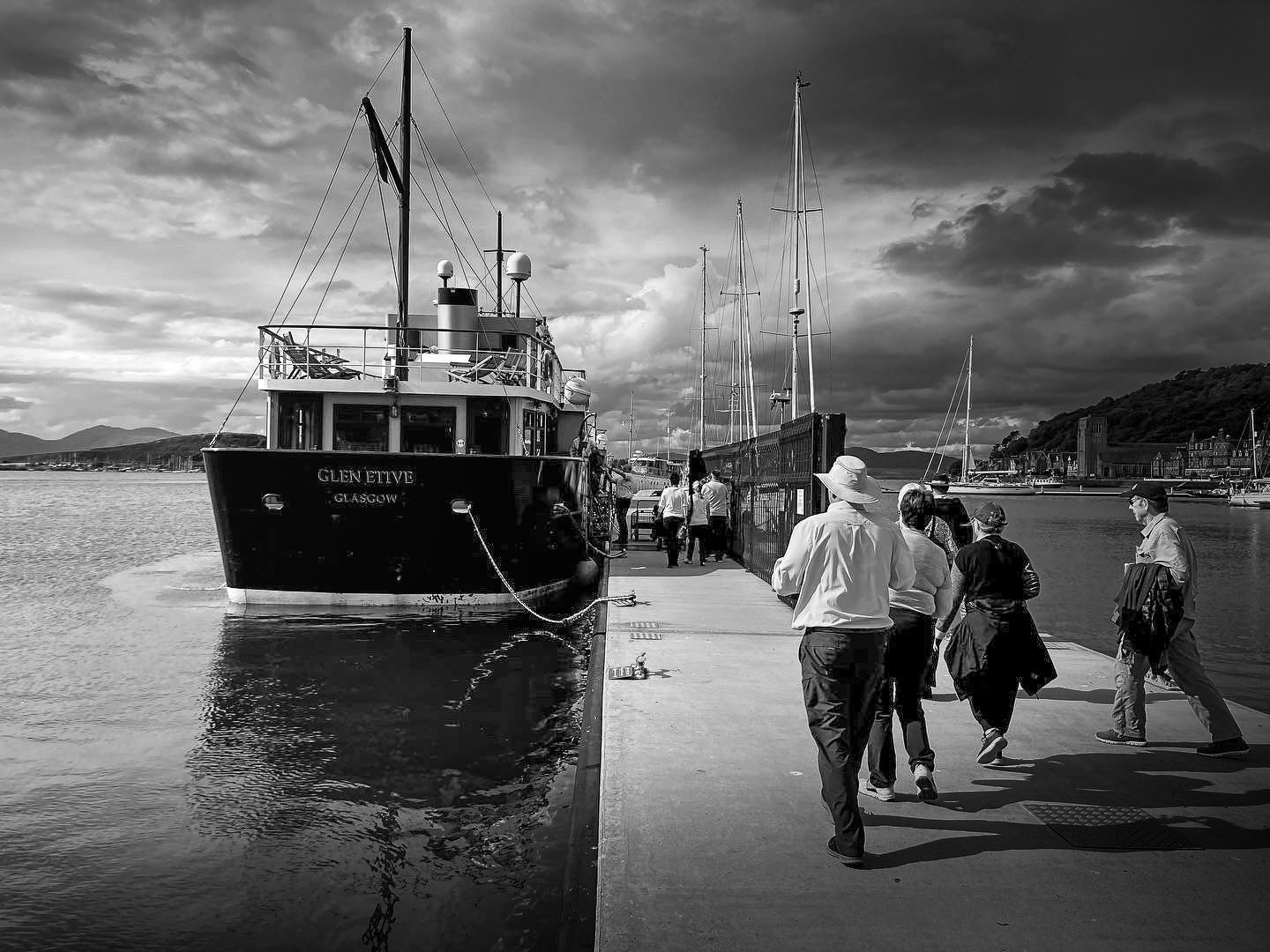
The following week, without telling her husband, the mother drove her daughter to the docks. They joined tourists for a morning cruise aboard the Glen Etive, which was owned by an old Scottish sailor who’d retired in Italy.
The weather was uncertain. Sure enough, during part of the day, they hit rough waters and strong gales. Foam streaks and sea spray covered the windows.
“I’m scared,” the little girl said as the ship rose and fell in choppy waters.
“Do you remember the book we read last month, sweetheart?”
“Yes, Mamma, it was Little Women.”
“Exactly. And do you remember what Amy March said?”
“I’m not sure.”
“She said, ‘I don't know how long it will last, but I'm not afraid of storms, for I'm learning how to sail my ship.’ And that’s what you’re doing, my dear. You’re learning how to sail your ship.”
The girl never forgot that day with her mother.
Whenever she was uncertain or frightened, she’d repeat that line from the book. And on the day she gave birth to her daughter, as the contractions became severe and the medical team monitored her heart, she gritted her teeth and whispered, “I’m learning how to sail my ship.”
She kept repeating it, between contractions, until the pushing and pain took her breath away.
After the baby was born, life took on a magical new dimension. Where once there had been only a husband and wife, now there was a family.
They named the baby girl Antonia, after the boy’s uncle. And they chose Ferrari as the middle name, which pleased the baby’s grandfather to no end.
The next seven years were idyllic.
The boy had become an English teacher and the girl helped out in her father’s flower shop whenever Antonia was in school. Sometimes Uncle Antonio would come by with a bottle of wine, and often nonno (grandfather) Ferrari would bring flowers and join them in the early evenings.
Nonno reminisced about his wife, about what a lovely mother she was. Then he added, “But she never should have taken our daughter on that treacherous boat tour!”
“Oh, Papà, you need steadier sea legs! You need to sail your ship, and stop being afraid of storms.”
Everyone laughed and Antonio poured more wine and the baby played with the flowers. It was this memory that would sustain the boy in old age, even though its luster was tainted by an adjacent memory.
The memory of what happened next.
Nonno returned to the flower shop after a particularly profitable afternoon of singing and accordion playing by the cortile.
“Sweetheart, your papà is back, and perhaps I will take you and your family to dinner tonight!”
There was no reply.
He found her in the supply room, on her back lifeless beside her favorite yellow mimosa blossoms. In her hands was a new copy of Louisa May Alcott’s book Little Women.
Uncle Antonio had been in the shop earlier. He remembered the girl saying once that Little Women was her favorite childhood book. Thus, he bought her a new copy as a gift to share with her daughter.
The reception after the funeral was a sad affair, but there were moments of grace, too.
The boy talked about the day he found out his parents were killed in an automobile accident. How if it hadn’t been for Uncle Antonio adopting him, and sharing his library of books, he would have become lost.
“And now my daughter has lost a parent,” the boy said, wiping his eyes.
“But you were right, my boy. You were right,” Nonno said, gently patting the boy’s back.
“I was right?” the boy said.
“That day you asked for my blessing. I was convinced it was the wrong thing, getting married so young. But you persisted. What did you say? That line from Dante?”
“Love has quite governed my soul,” the boy said.
“That’s it! And you spoke the truth. You made my little girl so very happy. And she was able to have a family. You and her beloved little Antonia Ferrari!” to which nonno picked up the child and hugged her tightly.
Antonia blushed, kissed nonno on his cheek, and ran off into the kitchen.
“How is she holding up?” Uncle Antonio asked.
“Good days and bad leading up to today. It’s just been so hard. The pain. I don’t know how long it’s going to last,” the boy said.
“You know, that’s what she said,” Antonio said as he sipped his wine.
“What she said?” Nonno asked.
“That day, I was the last person to be with her. I’d brought in the book, Little Women, so she could read it to Antonia. She was glowing, and then her eyes welled up and she hugged me. Her happiness filled the room,” Antonio said.
Nonno had his arm around the boy now, and they sort of rocked back and forth together.
“And did she say anything to you?” Nonno asked.
“Yes, she did. She held the book in front of her, kissed the cover, and then looked me right in the eyes. She had such beautiful, kind eyes.”
They all sat quietly for a moment, and then Antonio continued.
“She said, ‘I don't know how long it will last, but I'm not afraid of storms, for I'm learning how to sail my ship.’”
(This story is a work of fiction. Photographs by John Patrick Weiss)
Weiss Journal is free. No subscriptions or paywalls. If you’d like to support my work, coffee is always nice.