Not Too Late
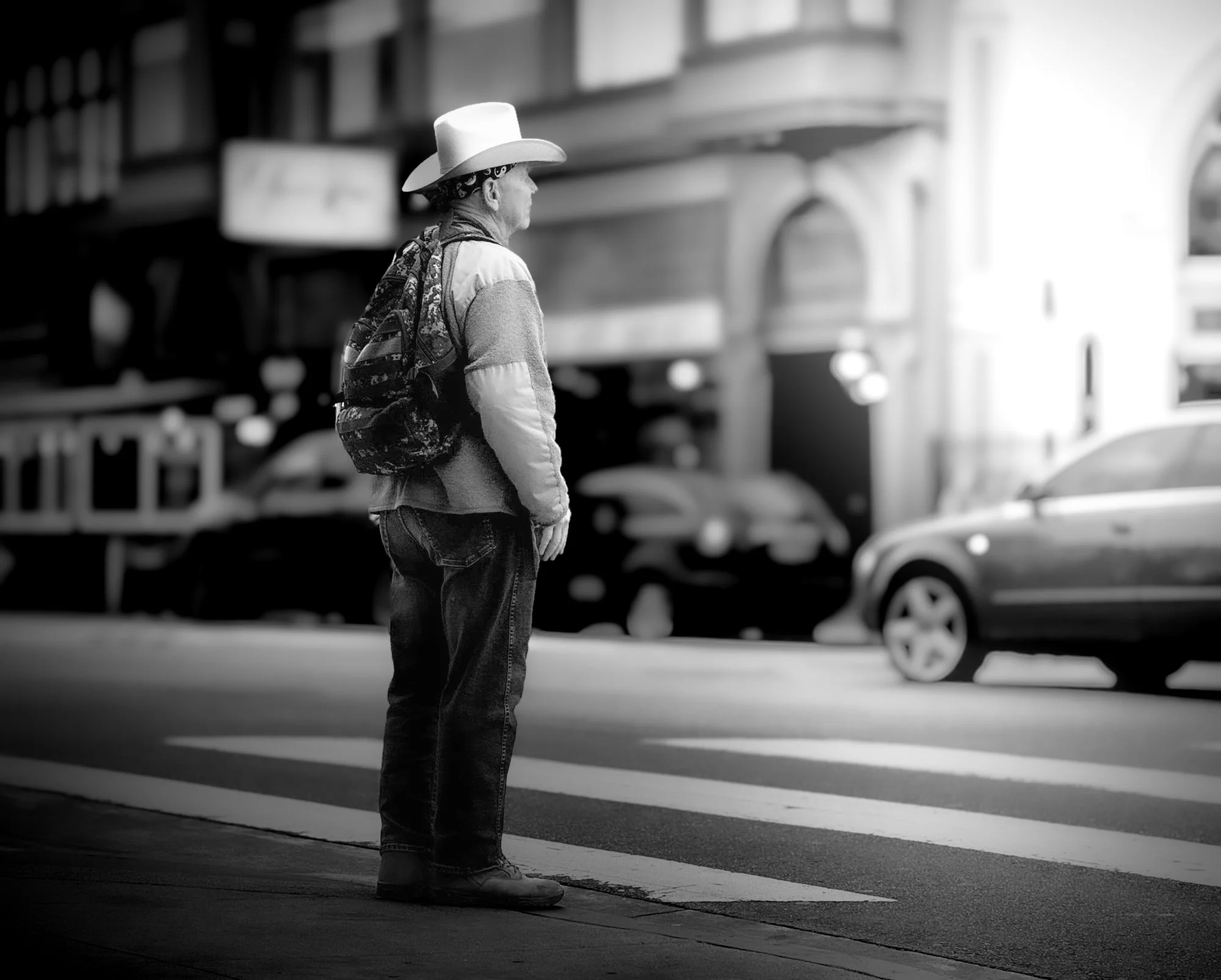
He had been on the bus most of the day, carrying a small canvas bag over his shoulder with two shirts and a pair of trousers inside. He had come from a long way south, crossing the border and then taking buses north, sleeping in bus stations when there was nowhere else to go.
He had not planned on coming to San Francisco. Then a woman who had known his brother years ago called and told him that his brother was sick and that some friends were going to hold a prayer vigil. She knew the brothers had not spoken in years.
She said she thought he should come.
When he got off the bus the air was cool and damp, and the streets were wet from an earlier rain. He stood with his bag at his feet and looked at the buildings, trying to remember the city from another time. Across the street a church was lit from within, its tall windows glowing against the dark. People were coming through the doors in coats and sweaters, carrying umbrellas.
The woman who had called him found him there. She put her arms around him and said she was glad he came. He nodded and picked up his bag.
There were not many people at the vigil. Some were friends of his brother, others people from the neighborhood who had never met him but had heard he was sick. They prayed for a while and then sat around drinking coffee from paper cups. Someone passed a plate of sweet bread.
He listened to them talk about his brother and was surprised by how many small things they remembered about him. One man said his brother used to bring soup to old people in the neighborhood. Another said he had once stayed all night with a stranger whose car had broken down in the rain.
Afterward, the woman asked if he wanted to go to the hospital.
He said he did.
His brother was awake when they entered the room. He looked smaller than he remembered, his face gray beneath the hospital light. For a moment neither of them knew what to say, so his brother looked out the window and he stood beside the bed with his hands in the pockets of his jacket.
Then he said, “Do you remember the ranch?”
His brother turned toward him.
They began with the old house and the well that sometimes went dry in August. They remembered their mother hanging clothes behind the kitchen and their father coming home at the end of the day with dust on his boots. They remembered a horse that got loose one night when they were boys and the two of them chasing it through the fields until dawn.
His brother laughed, though it became a cough and he had to close his eyes.
“I thought about that horse a thousand times,” he said.
“So did I.”
They were quiet for a while. Outside the window, the city went on beneath them, headlights moving along the wet streets.
His brother reached for his hand.
“I was angry a long time,” he said.
“I know.”
“I don't want to be anymore.”
He sat beside the bed and held his brother's hand. After a while they talked about their mother again, and then about the ranch, and then about things that had happened so long ago neither of them could remember exactly which year they belonged to. There were tears, but neither brother mentioned them.
He stayed until his brother fell asleep.
When he stepped outside, it was nearly morning. Across the street the church was still lit, though there was no one inside now. The light fell across the sidewalk and onto the backpack on his shoulder.
He stood there for a moment before walking toward the bus station. He had come a long way to see his brother.
He was glad he had not waited any longer.
Photograph by John Patrick Weiss
Have you ever found your way back to someone? Share a thought in the comments below.
Weiss Journal is free. No subscriptions or paywalls. If you’d like to support my work, coffee is always nice.