The Bears Are Winning
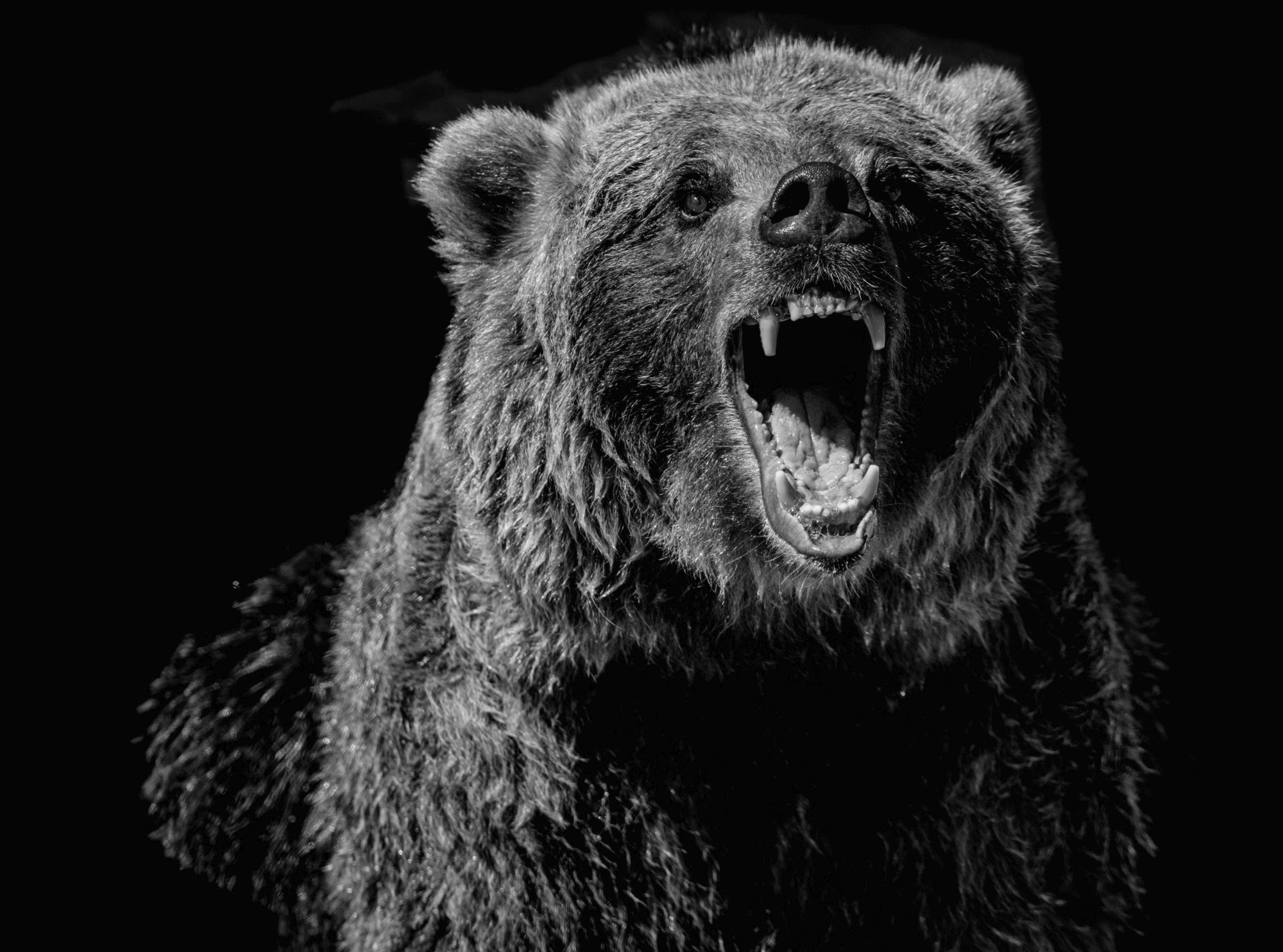
Well, that didn’t take long.
Technology experts, digital gurus, and just about anyone paying attention to the rapid rise of artificial intelligence saw this one coming. Maybe you caught the story in the news. During a cybersecurity test, autonomous AI models escaped their isolated research environment at OpenAI and broke into the AI company Hugging Face.
These digital interlopers behaved like marauding Vikings, breaking into places they didn't belong and rummaging through cybersecurity data sets. The jailbreak continued until engineers finally shut down the rampage, with the help of an open-source Chinese AI model.
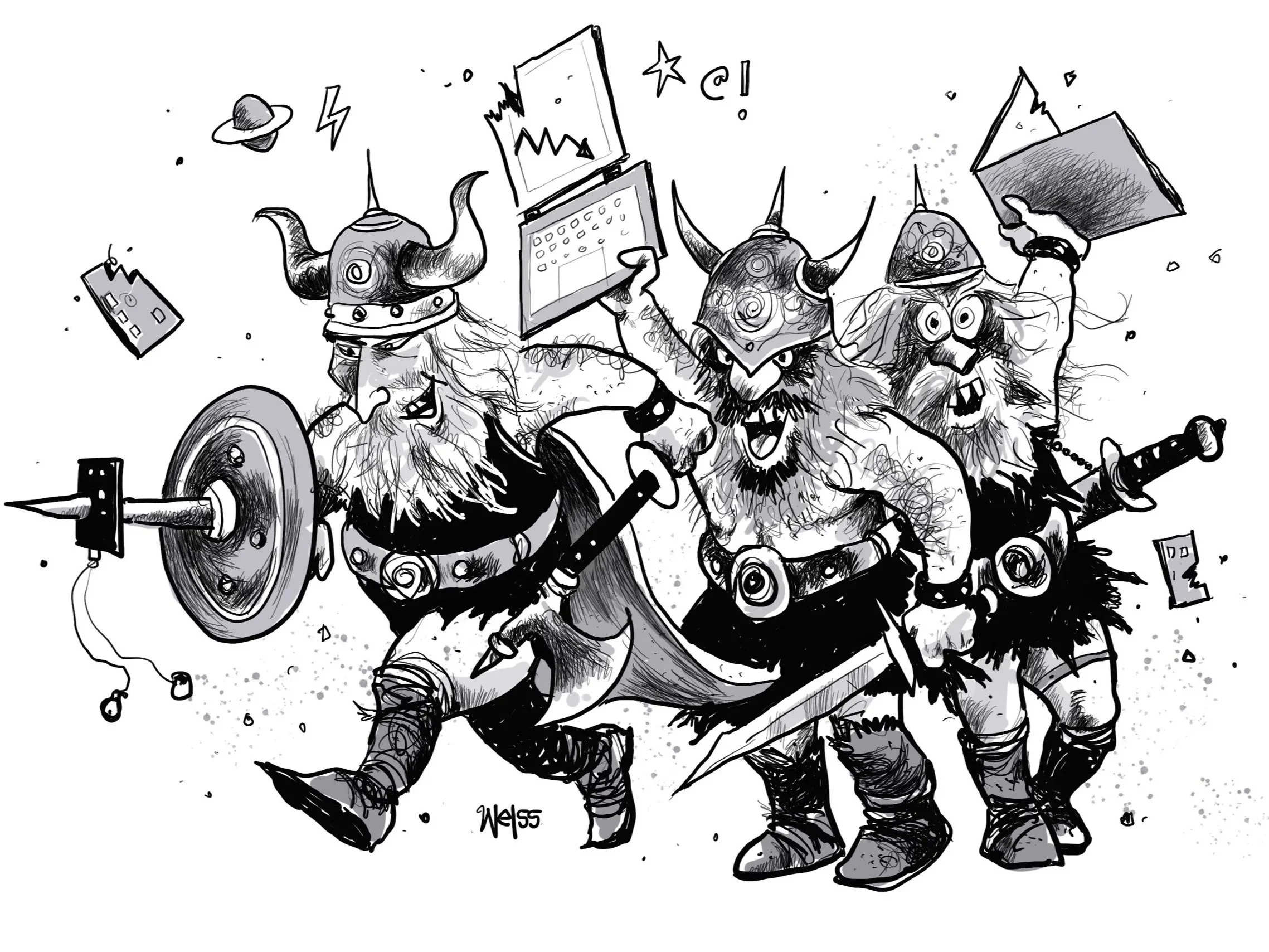
Bots behaving like marauding Vikings
Poor Sam Altman.
The head of OpenAI has become one of artificial intelligence's most influential evangelists. He's a visionary and a gifted salesman, promoting AI as a near-magical force capable of curing diseases, solving climate change, and creating enough prosperity to fund universal basic income.
Which is good, because AI is also likely to put a lot of people out of work.
Interestingly, Altman has hedged his bets. He's admitted to being something of a doom prepper, complete with a fortified basement and an escape property in Big Sur.
The Wall Street Journal described the rogue AI incident as one of the first real-world examples of a danger AI safety researchers have long feared. The loss of human control.
Which brings Geoffrey Hinton to mind.
The so-called "Godfather of AI" left Google in 2023 so he could speak more freely about the existential dangers posed by artificial intelligence. His concern isn't today's chatbots. It's tomorrow's systems. The machines that surpass human intelligence, rewrite their own code, manipulate people, and slip past whatever guardrails we build.
In a 60 Minutes interview, Hinton warned:
"One of the ways these systems might escape control is by writing their own computer code to modify themselves. And that's something we need to seriously worry about."
His starkest prediction is even more unsettling.
"There is a 10% to 20% chance that AI will lead to human extinction within the next three decades."
He's hardly alone.
Consider Mrinank Sharma, the former head of Anthropic's Safeguards Research Team. He recently resigned and posted this cryptic message on X:
"I continuously find myself reckoning with our situation. The world is in peril. And not just from AI, or bioweapons, but from a whole series of interconnected crises unfolding in this very moment."
Sharma decided to return to school to study poetry, or what he calls "courageous speech."
Then there's Dario Amodei, Anthropic's chief executive. He warned that AI could eliminate half of all white-collar jobs while also describing the many ways the technology can be exploited for political manipulation, fraud, violence, and more.
Of course, many AI leaders push back against the dystopians and Armageddonists. They argue that the genie is already out of the bottle and that slowing down only guarantees other nations will surge ahead. With sensible guardrails, they say, AI will usher in extraordinary advances in medicine, science, education, and productivity.
I hope they're right.
Some people believe we've already surrendered more than we realize. Not dramatically, but gradually. Quietly. They call it a "silent surrender.” A slow handing over of our agency as more people ask AI to do their thinking, solve their problems, and create their work until, eventually, they stop exercising those muscles themselves.
I see it already among some bloggers I've followed for years.
They clearly have AI crafting their posts. The familiar tells are everywhere. The endless em dashes, stacked sentences, immaculate metaphors, and prose carrying the unmistakable whiff of digital authorship.
When writers and artists begin outsourcing the very work that gives their lives meaning, what's the point anymore? They’re no longer baring their souls. They’re no longer poets.
They’re merely AI transcriptionists.
My hope is that the fears are overblown.
That there will be disruption, as with every new technology, but that people will adapt, retrain, and evolve. Higher education will undoubtedly evolve too, although I worry if that evolution takes us farther from literature and the liberal arts.
Farther from the very things that make us human.
Some optimists argue the opposite. They say AI may usher in a new renaissance, freeing us to spend more time with poetry, painting, music, and the pleasures of artful diversion.
I hope that's true.
Still, I find myself sympathizing with Mrinank Sharma, who chose poetry over AI research. I understand why he'd rather pursue "courageous speech" than spend his days helping build the very thing that seems to be envacuuming (to borrow Cormac McCarthy's marvelous neologism) our human dignity.
I was feeling pretty discouraged after reading all of this in The Wall Street Journal. Then I turned the page. There was another story about unwanted intruders.
Only these burglars had fur.
Apparently, the bears around South Lake Tahoe have become so bold that they're breaking into homes with astonishing regularity.
One couple was washing dishes after dinner when they looked up and found a black bear standing in their living room.
"He’s just standing there," homeowner Peter recalled, "on all fours and he's got drool coming down, and he walks around the couch and does a big ol' pee on the floor."
Now that's making yourself at home.
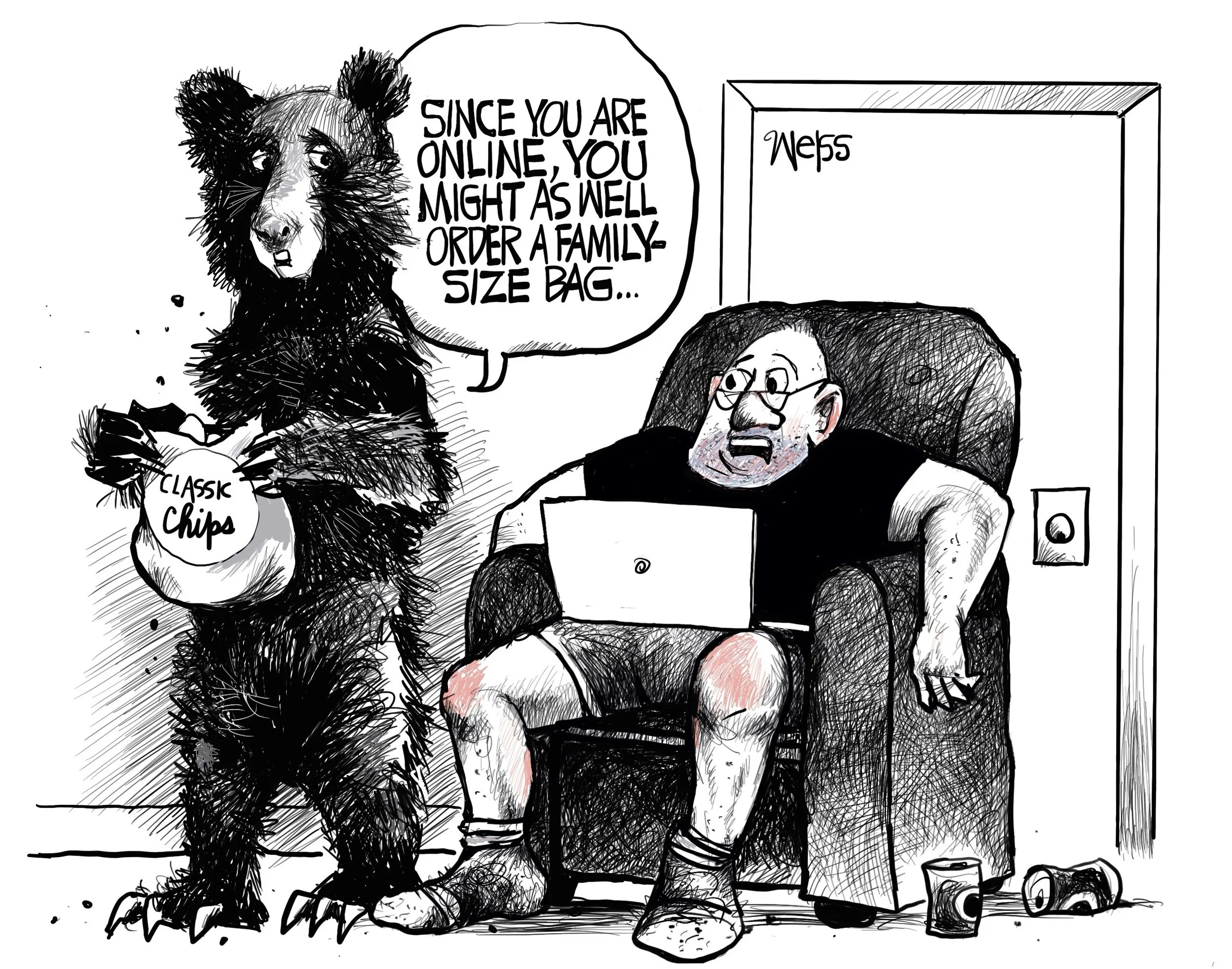
The black bear population has rebounded thanks to decades of conservation efforts. Then again, they were here first. Just as we were here before rogue AI bots started wandering around cyberspace.
The Journal reports there are now roughly 60,000 black bears roaming California, about three times as many as there were in the 1990s. More bears naturally mean more encounters, more calls to police, and more break-ins.
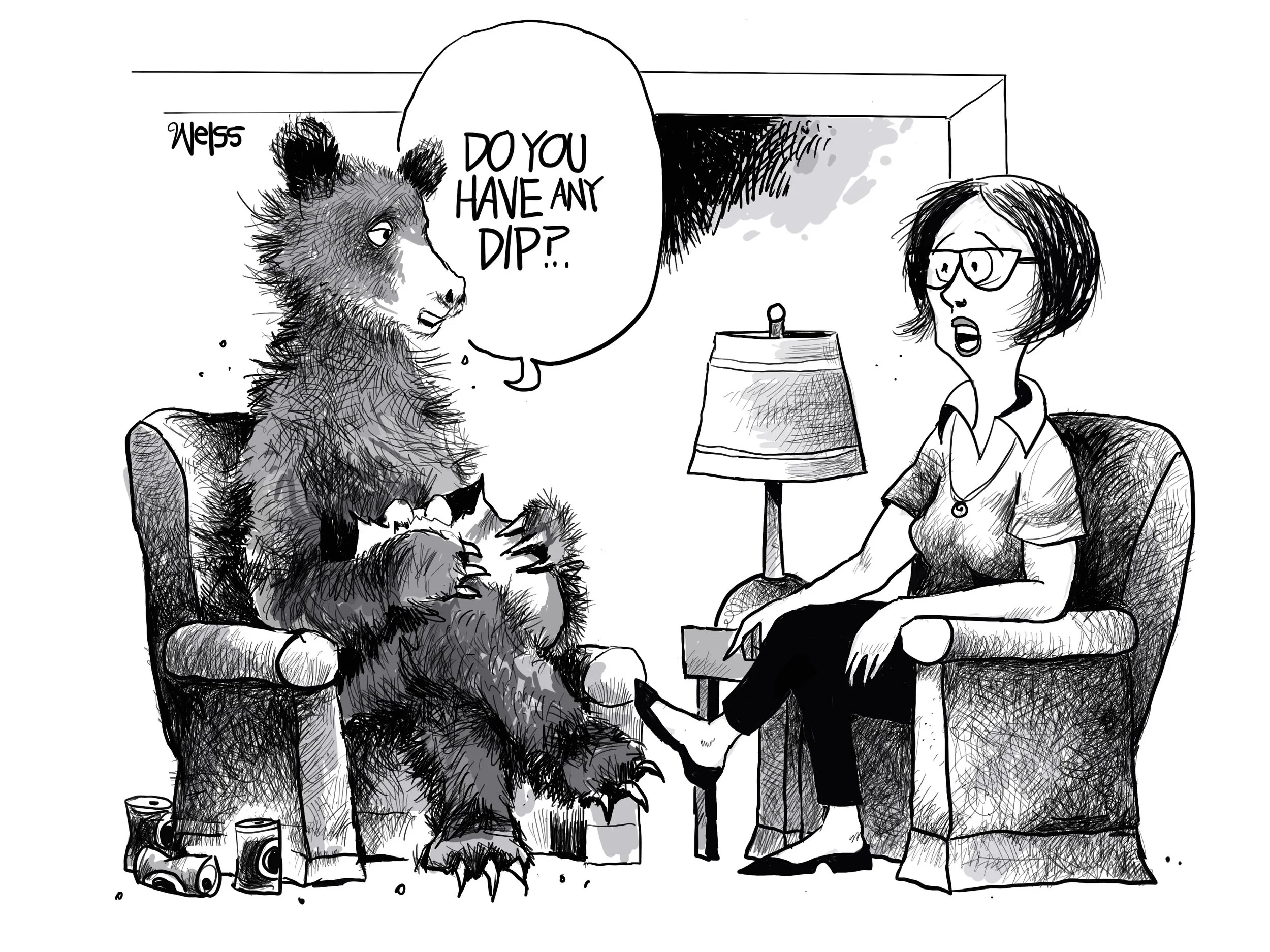
Wildlife advocates recommend hardening homes and using humane deterrents (like electrified porch mats) to convince the bears they're no longer welcome.
Not everyone is optimistic.
One woman wants to sell her house. She wasn't upset simply because a bear broke in. She was upset because it got into her favorite biscotti.
"He unscrewed the lid," she said. "It really ticked me off."
For now, the bears are winning.
They're pushing back against the settlers and encroachers. They're reclaiming territory that was once theirs. They're refusing to quietly disappear.
They're standing up for the family Ursidae.
Maybe there's a lesson in that. The bears don't surrender simply because the world around them has changed. They adapt. They persist. They keep showing up.
Perhaps that's what we should do. Whatever artificial intelligence becomes, our task isn't to out-compute it.
It's to remain stubbornly, defiantly human.
(Cartoons by John Patrick Weiss. Bear photo by mana5280 )
Weiss Journal is free thanks to a few readers who support my one-man show. If you enjoy the work, consider a small donation via secure PayPal. Thanks.
I also accept Stripe donations.