I Wanted To Be Like Him
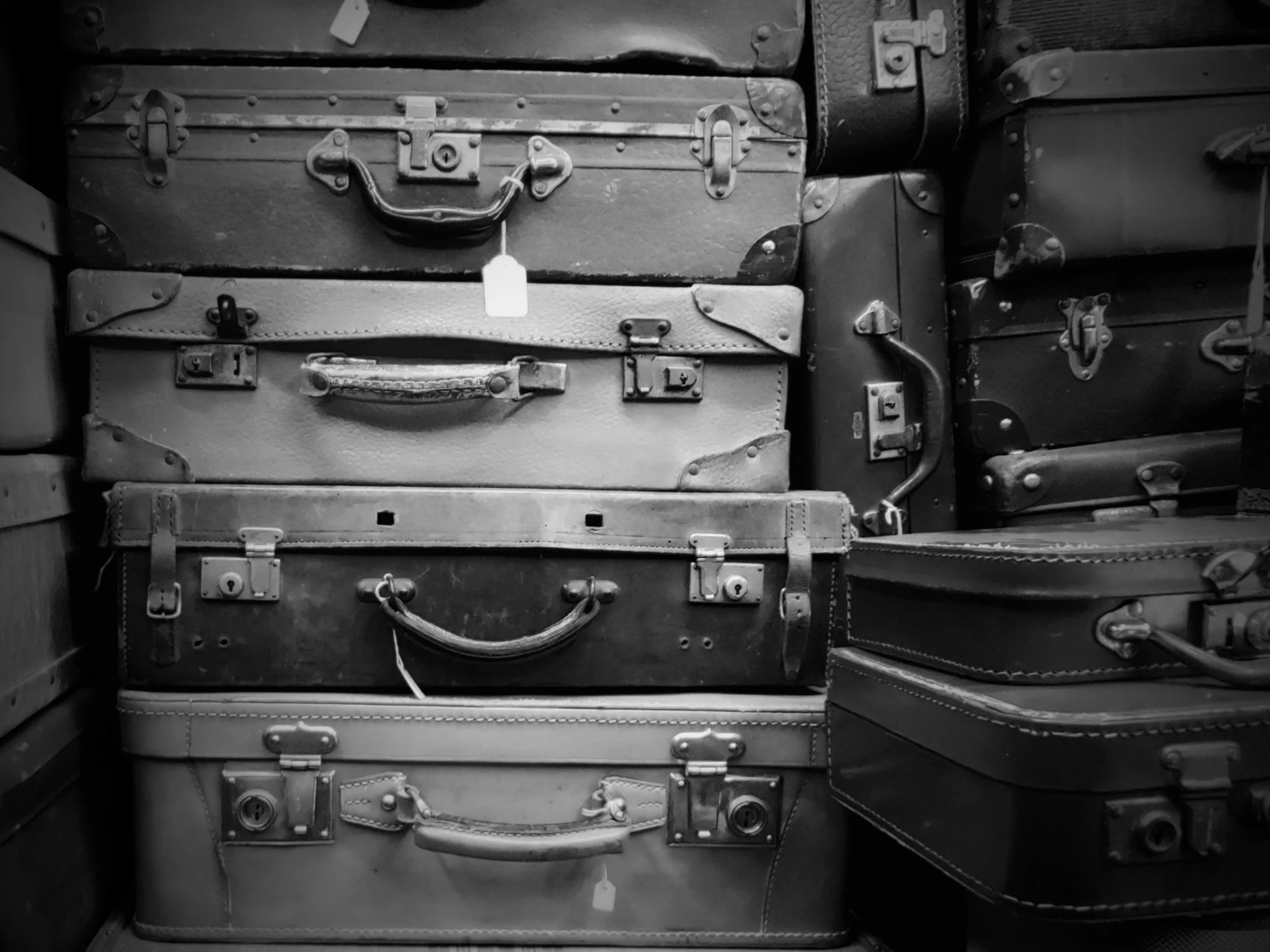
Photo: Kin Wai Cheung
We’d just finished dinner and settled into the living room where my sister and I watched Star Trek and my mother sunk into the recliner to read a paperback. It was mid-week in December, a miserable night of cold, rain, and high winds.
The poodle started barking.
“Daddy must be coming up the driveway,” my mother said as she rose and parted the curtains to look outside. Then we heard the Buick Riviera’s engine as my father reached the top of the driveway and edged up to the garage door. He couldn’t park inside the garage because our Lincoln Continental took up half the space, and the other half was filled with tools, household items, and junk.
I got up to greet him. He opened the front door and handed me his dark attache case.
“Hold this a minute, Johnny. I need to get this thing off. It’s soaked.”
He slipped off his London Fog raincoat and shook it vigorously under the doorway portico. Then he stepped inside despite the raindrops cascading off his dark blue suit.
“Welcome home,” I said.
“Good to be home.”
He tussled the top of my hair with his beefy left hand.
Dad was an administrative law judge. He commuted weekdays from our home in Los Gatos, California, all the way to San Francisco. This required him to leave around 5:30 AM each morning and drive to the train station in Santa Clara, where he rode the Southern Pacific to San Francisco. From there he boarded a bus to his office building. At the end of his workday, he’d reverse the ritual and come home. He used to drive to the city, but after suffering a heart attack years back, his doctors urged him to take the train and reduce the commute stress.
Standing at six feet tall and over 200 pounds, my father was a solid, imposing man. He was also a historian, well-informed, well-read, and impossible to win an argument with. Fortunately, we seldom argued.
After he stepped in the door, I followed him, carrying his heavy attache case, as he made his way to the master bedroom. He asked about school and I told him I had a creative writing assignment to do once Star Trek was over.
“I see you have your priorities lined up,” he said with a chuckle.
My sister was the star academic in the house. She had always been an avid reader and regularly got excellent grades. I was mostly lost in my drawings and playing outside in the woods. The joys of books and literature came later in life for me, during the university years. My elementary and high school grades hovered around Bs and Cs.
“Once you finish your writing assignment, let me take a look at it,” Dad said.
I laid the attache down on the edge of the bed and said, “Okay.” I knew what my father taking a look at my homework meant.
Lots of revision.
Dad clicked open the attache case and I gazed at the contents. There were his Parker 21 and 45 fountain pens, clipped to the center divider. There were long legal pads filled with his exquisite copperplate handwriting. There was a copy of the Wall Street Journal. In later years, he’d regularly clip Journal articles and mail them to me with thoughtful commentary in his letters. And there was a W. E. B. Griffin novel from his Brotherhood of War series, with little handwritten reading notes poking out from the pages.
I scampered off to finish watching Star Trek while my father changed his clothing.
The other day I was reading Ann Patchett’s latest novel, Whistler.
A mere twenty-four pages into the novel, the protagonist, Daphne Fuller, is having a conversation with her sister Leda about their stepfather. Daphne asks, “Did you ever work through any of this as an adult?” Leda replies, “Interestingly, I have not. Somehow this brief but meaningful chapter remained subterranean. This is a revelation in real time. So did you and Eddie talk about the accident?”
I re-read Leda’s reply.
This doesn’t sound like the way real people talk, I thought to myself. How often do people in conversation lead with “Interestingly” and throw in words like “subterranean”? If Leda had said, “No, I haven’t. I put it all out of my mind, until now. Did you two talk about the accident?” the lines would have felt more authentic.
The dialogue felt too engineered for my taste.
So I took a break and dove into Wally Lamb’s The River Is Waiting. At the center of this novel is an immense tragedy which occurs early in the book. Lamb’s voice and style is different from Patchett’s, as he presents gritty, deeply flawed characters and the dialogue feels raw, messy, and less engineered than Patchett’s.
But then, on page eleven, the protagonist shares the following about his neighbors, Linda and Shawn: “Linda’s outgoing, but Shawn always seems standoffish. Suspicious, almost. Toward me, anyway. He’s a recently retired state cop. That probably explains it. I have the feeling that ‘Make America Great Again’ sign on their lawn last year was his idea, not hers.”
This made me groan.
I find it tiresome whenever authors feel the need to inject their political dogma into their stories, particularly when it serves little purpose beyond stereotypes and cliches about people or their professions. Had Wally Lamb written, “Shawn always seems pretentious. Self-important. Toward me, anyway. He’s a recently retired university professor. That probably explains it. I have the feeling that ‘Build Back Better’ sign on their lawn last year was his idea, not hers,” I’d equally groan.
Cops are right-wingers and professors are left-wingers.
Those are the stereotypes.
Statistically, that might even be true, but it’s not very interesting. I knew a burly cop who was a SWAT member. He was also a thespian who performed in serious plays in downtown San Jose. Politically, he leaned to the left. And one of my university professors was an ardent conservative. I find both of them far more interesting because they contradict the stereotypes that people like to cling to.
No doubt Ann Patchett and Wally Lamb are exceptional novelists with a proven track record of publishing popular, successful novels. But even so, I found myself annoyed by Patchett’s engineered dialogue and Lamb’s political commentary.
Where does this scalpel-like literary critique of mine come from, I thought. Why can’t I just read the darn story and stop hovering over things I disagree with?
And then I remembered all the times my father reviewed my English papers. Especially during my high school years.
I remembered him grabbing his pencil, and the way he’d mark up the page.
He’d write things like, “Too much authorial intrusion,” and “I don’t believe you,” and “Stop trying to impress with fancy words.”
In short, my father was a brutal editor. He would have made Maxwell Perkins proud. He was a stickler for perfection. He said that words matter, so choose wisely.
I used to hate handing him my creative writing assignments because I knew he’d find things wrong with them. Although he was also good about dispensing praise when warranted. He’d never destroy my spirit, and he always had some words of encouragement.
Looking back, I think I understand something about those evenings that I didn’t understand then. My father wasn’t simply helping me with my homework. He was teaching me how to see.
He taught me to notice when a sentence sounded false, when a writer was intruding too much into her own story, when a word had been chosen because it was precise or because the writer wanted to sound clever. He taught me that people are more interesting when they don’t fit neatly into the categories we’ve assigned to them. He taught me to distrust easy answers and to pay attention to the small things that make a person believable.
I suppose that is partly why I can’t simply read a novel anymore. I read it with my father looking over my shoulder.
Most of all, what struck me was that even after a long day at work and hours of commuting, Dad still found the time to help me with my homework. He read everything I gave him, and through his edits and advice I began my journey toward becoming a better writer.
In the earlier years of my grade school education, around fifth grade, Dad gave me one of his well-used attache cases. He’d bought a new one and said, “Here you go, Johnny. Your very own attache case.”
I was thrilled.
I began lugging that heavy attache case to school with me. I filled it with school books, my binder, some ballpoint pens, and a sketchbook. The school I attended was a private one called Denman Day School, now defunct. We had to wear uniforms, but that didn’t stop some kids from picking on others.
And a few began giving me a hard time about my “lame” attache case.
But I didn’t care. I remember telling those kids to grow up, and that the attache case had belonged to my father. When I carried it around with me, it made me feel mature. It made me feel like I was going places. That I was adult-like.
But most of all, it allowed me to mimic my father. The man I loved and looked up to.
I wanted to be like him.
Dad retired from his legal career at the age of 79.
He carried around those attache cases for a lot of years, commuting long hours and staying up late writing legal decisions to support our family. And even during my university years, when I finally turned on to books and literature, he’d mentor me and discuss my university work with me over the phone. During one fall semester visit to the university campus, he even sat down and helped me rewrite several essays due for my final exam.
So I suppose I have him to thank for my critical eye and literary critique. Not to mention my obsessive attention to detail.
A few months back I was watching the film The Intern, starring Anne Hathaway and Robert De Niro.
In the film, De Niro plays Ben Whittaker, a 70-year-old widower who becomes a senior intern at an online fashion site. He shows up each day in tailored suits, carrying his 1973 Executive Ashburn attache. All the young employees in the company are casually dressed, carrying around their laptops. But they’re intrigued by Whittaker’s formal attire, his classiness, and his old-school attache case.
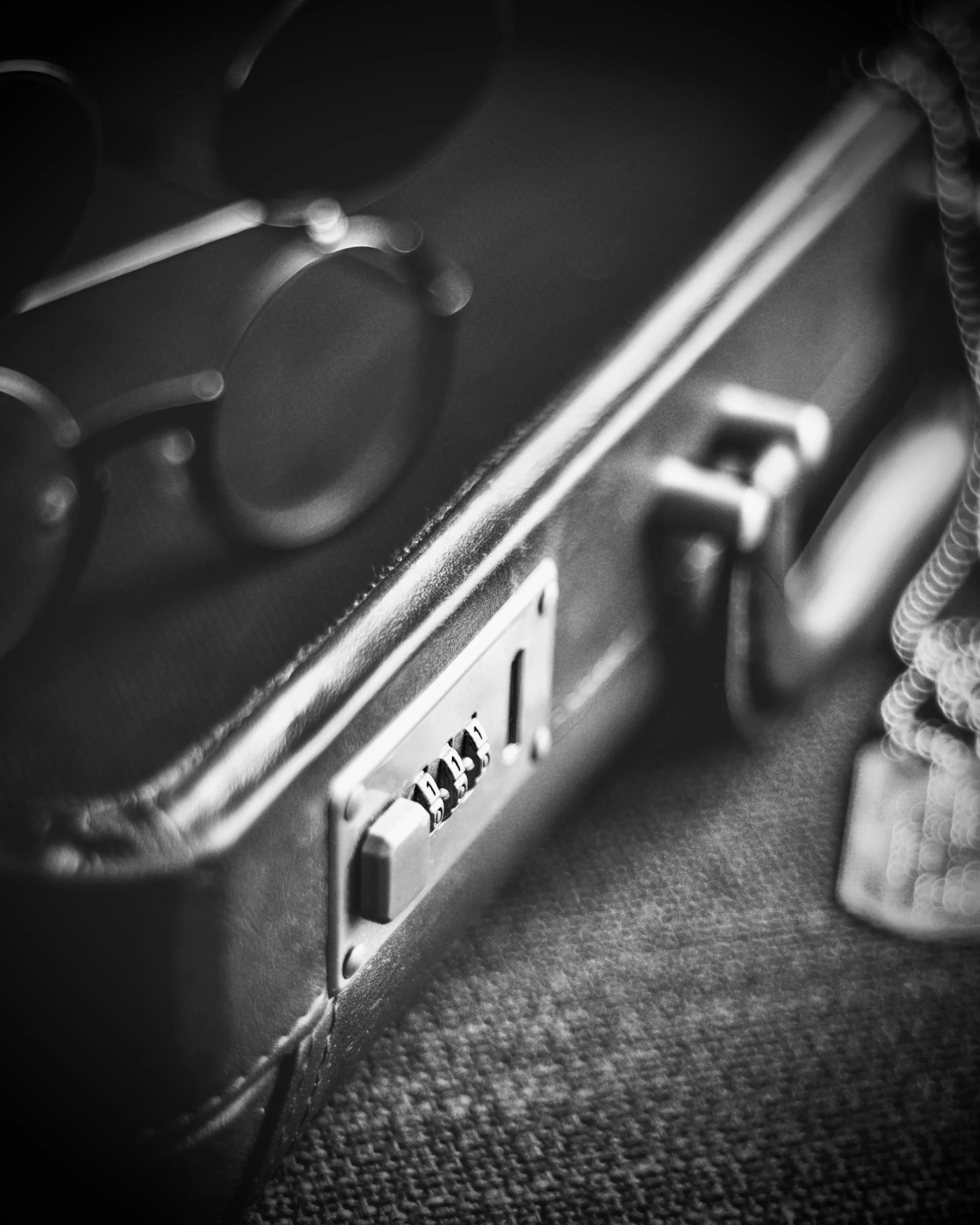
Photo: Shlomi Platzman
One young employee notices Whittaker’s retro, perfectly organized attache case and asks him about it. Whittaker replies that it’s a classic, and that “they don’t make it anymore.”
And I thought of my father, whom I’ve written about often at the risk of hagiography. But I can’t help it. Because when I was a boy, I wanted to be like him.
I still do today.
He was from a different generation and a different time. Perfect and imperfect like all generations. And yet I can’t help thinking about my father, and the man I wanted to become.
They don’t make it anymore.
My work here is free. No paywalls or subscriptions. If you would like to support my efforts, coffee is always nice.