What Is Interesting and Important Happens Mostly in Secret
Nothing much happens at the head table

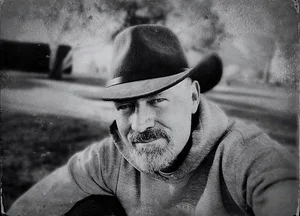
Photograph by John Patrick Weiss
The day had come when I was invited to breakfast with the big boys. The movers and shakers of our modest little town. These people included the mayor, the police chief, and a local businessman and land developer.
They met every Wednesday at a fast-food establishment owned by the businessman. The meetings took place early, before the restaurant was open to the public.
I was a young police lieutenant and a candidate to become the next police chief. The current chief was nearing retirement and had begun mentoring me with greater frequency. I was excited because the invitation to breakfast with these community leaders meant I had stepped into an inner circle. A place of responsibility and power.
I imagined that great things were decided there.
At that first meeting, the police chief introduced me to the group, even though they already knew me. I got the sense that they knew I was being groomed, and that my presence there was a kind of initiation. I was careful to be thoughtful in my comments.
Local issues were discussed. Political dynamics and practical solutions to problems. A bit of banter and joking as well.
What struck me was that none of the discussion was surprising or mysterious. It was all rather straightforward and predictable. I had expected lofty ideas and grand plans for the future, maybe old secrets and big surprises. But it was none of that.
In many ways, it was underwhelming and disappointing.
What on earth is going on in here?
When I was a boy, my family used to visit another family for Thanksgiving dinner. At Christmastime, the other family would visit us for dinner.
During these gatherings, my sister and I were always placed at the children’s table with the two daughters from the other family. The adults all sat at the big table.
This was always agreeable with us kids because the adult conversations were boring. They’d talk about their work and politics and things we didn’t fully understand. But at the kids’ table, we were mostly free to be silly, joke and tell stories, and share our little secrets.
We’d laugh and become a little raucous, and one of the girls always spilled her glass of milk. Inevitably, one of our mothers would come into the room and say, “What on earth is going on in here?” And we’d giggle and wink at one another, as if our table held unimaginable secrets.
And maybe it did.
In my teenage years, the banishment ended and we all sat at the big table. The adults would ask about our schoolwork, and we’d listen politely as our parents discussed work and politics and life.
It was nice to be included, to feel like an adult.
But it wasn’t nearly as much fun as the kids’ table, where we used to whisper secrets and tell our imaginative stories, free of the unspoken restraints and conversational conventions of adulthood.
It also seemed that what we shared with one another as children was more honest and true. Our likes and dislikes, raw and honest, not couched in platitudes or careful adult wording.
Dining at the adult table was much like attending those early morning breakfasts with city leaders. I had thought great things would happen at both, but not really. They were somewhat predictable and boring.
Nothing much happens at the head table.
It was all so very raw and honest and vulnerable
I recently read Michael Ondaatje’s novel The Cat’s Table.
The novel follows an eleven-year-old boy named Michael who boards a grand ocean liner bound from Sri Lanka to England in the early 1950s. Seated at the least prestigious dining table, dubbed the Cat’s Table, with two other boys and an eccentric group of adult misfits, Michael embarks on a journey of childhood adventure and discovery.
There was a paragraph in the novel that stayed with me:
“What is interesting and important happens mostly in secret, in places where there is no power. Nothing much happens at the head table, held together by a familiar rhetoric. Those who already have power continue to glide along the familiar rut they have made for themselves.”
I thought of the police chief who mentored me.
He was going through a tough time in his marriage, and every time we went to coffee together, he’d open up about it. We’d sit at a little table hidden in the back of the coffee shop. He’d lean in close and tell me about his hopes and fears.
It was all so very raw and honest and vulnerable.
He trusted me. And the fact that he trusted me with such intimate aspects of his life meant far more to me than being welcomed into the big boys’ breakfast club.
Those private little coffees with the police chief taught me things, too. About how we all suffer. We all have our doubts and fears and longings. I keep thinking about that line from The Cat’s Table. How interesting and important things happen mostly in secret.
Such true and honest things happen between husbands and wives late at night, whispering to one another in bed. “Maybe we should start a family?”
Such interesting and important things happen between a beloved teacher and her student, when the teacher says, “You have what it takes to become a wonderful author.” And the student, alone in the classroom with the teacher after school, begins to form a beautiful dream about the future.
Think of the quiet moments in your life, when a parent or spouse or friend or teacher whispered something consequential. Something interesting and important that resonated. That set you on your journey, or marked a transition, or gave shape to a future dream. Or maybe something that simply helped you understand life, and yourself, better than you had before.
Often, the most momentous things in our lives are seldom found at the head table. They’re found in simpler, quieter, more intimate places. Where we are free to be ourselves, and where people who truly care about us are free to tell us what we need to hear.
Even if it’s not always what we want to hear.
So much of life today is performative
Once, at one of our many little private coffees together, that same police chief told me about my shortcomings. Things he’d observed and suggested I work on. He was candid and direct. It was hard to hear, but it motivated me and helped me in ways no formal performance evaluation ever had.
What is interesting and important happens mostly in secret.
I often grab my Fuji X-Pro3 rangefinder-style camera and stroll around town shooting candid street photographs.
I like to capture real life as it unfolds. I try to be respectful and discreet, but sometimes people see the camera and strike a pose. I’ll oblige them and offer to email the photo if they like. But I seldom use such posed images to pair with my stories and essays.
Because the image is performative.
So much of life today is performative. Especially in the media and online, where everyone is selling something. Even those early morning breakfast meetings with the mayor, police chief, and businessman. They were performative, too, in a way. Each of us jockeying our ideas, careful to strike the right tone and balance the concerns of the others. An informal game of politics.
What interests me are the candid moments.
The real moments when people are just being themselves. Like when I was a boy at the kids’ table, laughing and carrying on and simply being myself. Or those intimate coffees with the police chief, where we shared our fears and dreams.
I eventually did become the police chief.
And I mentored my lieutenants and took them to quiet coffees, away from the formal meetings and politics and professional roles we performed in public.
There in the back of the coffee shop, we’d laugh and joke and talk about our hopes and dreams. It was never the big meetings I attended with other police chiefs, county officials, and politicians where anything profoundly interesting or important happened. Most of the time, sitting at the head table was about politics and posturing and performance.
When I retired, one of my lieutenants was appointed chief of police.
Maybe I should send him my copy of The Cat’s Table, with that wonderful paragraph underlined. How nothing much happens at the head table. But I think he already knows this to be true.
And hopefully, he’ll mentor his successor.