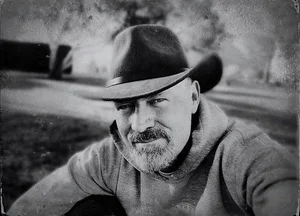
Nothing beautiful is ever truly lost
Photographs by John Patrick Weiss
I overheard two old men in a coffee shop. They were talking about life and physical ailments when the subject of haircuts came up.
“Joe, are you still going to that lady’s hair salon?”
“Yep.”
“Why not go to Eddy’s barbershop? It’s cheaper.”
“I like the salon. It’s clean and tidy. The gals are nice to me.”
“Eddy’s nice. Great barber. Hell, we both have crew cuts. Why pay more?”
Joe looked down at his coffee mug.
“I used to drive Carole to that salon,” Joe said.
They were quiet after that, sipping their coffee. Then Joe’s friend put a hand on his shoulder.
“I’m sorry, Joe. We all miss Carole.”
Not long after, the men left.
I sat there with my vanilla latte and pocket notebook. The tenderness of their conversation stayed with me.
I suspected Joe preferred the hair salon because it reminded him of his wife. Their old routines. A familiar sense of order.
And something Joe said struck me: “I like the salon. It’s clean and tidy. The gals are nice to me.”
After my coffee shop experience, I borrowed my wife’s copy of The Hemingway Reader from the classics corner of our library bookshelf.
She doesn't like me borrowing her books. Years ago, I misplaced her first edition copy of Mark Helprin’s Winter’s Tale, and she had to order another. Ever since, my borrowing privileges have been closely monitored.
I needed The Hemingway Reader because the conversation between the two men in the coffee shop made me think of Hemingway’s short story A Clean, Well-Lighted Place.

In the story, an old man sits in a cafe, in the shadow of the leaves. He drinks his brandy until the young waiter refuses to serve him and sends him out into the dark. The older waiter watches him go, knowing the terror of the night and the vast, unreckoned nada that lies waiting beyond their clean and well-lighted space. He locks the doors alongside the boy and walks out into the empty streets, where there is no god and no light save for the stark glare of an all-night bar. There, he drinks, knowing that a clean room and a bright light are sometimes all that stand between a man and the howling void.
Maybe Joe, the old man in the coffee shop, is running away from that same void.
He finds sanctuary in the lady’s hair salon. A clean, tidy, well-lighted place where there is companionship and tenderness. His wife is gone. Perhaps no one has touched him in years. He is soothed by the stylist and the way she gently massages his scalp and washes his hair. He likes the kind way she talks to him, perhaps reminiscing about Carole.
It almost feels as though she's looking after him now that Carole is gone.
I think of Simon Van Booy’s poignant little novel Sipsworth.
It’s about a solitary octogenarian named Helen Cartwright, living in a small English village. She awaits her final days until a tiny mouse trapped in an old aquarium disrupts her isolation. Caring for the resilient creature pulls her back from deep grief and reconnects her with the community and memories she left behind.
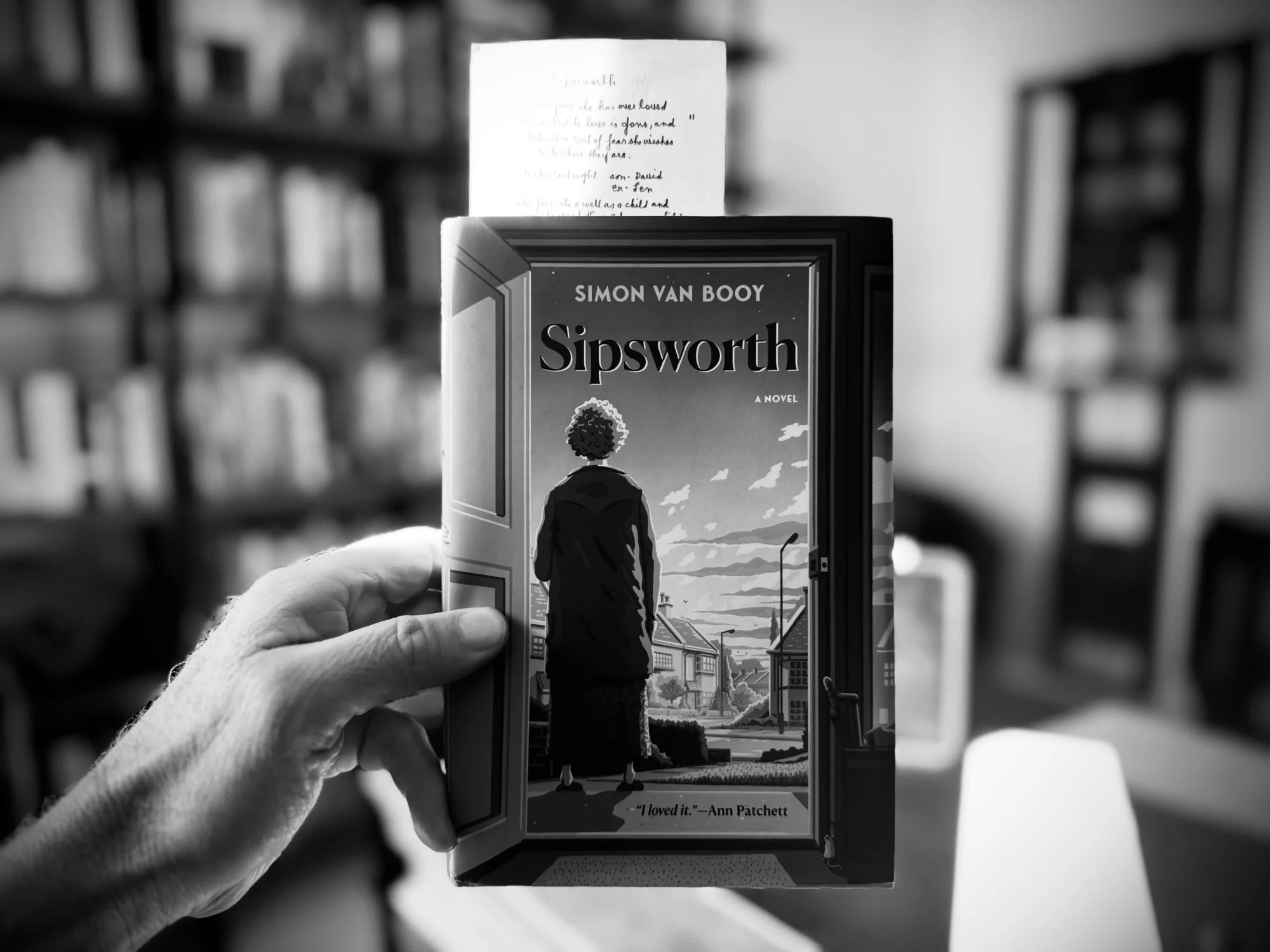
There’s a moment in the novel when Helen first holds the mouse.
“When the mouse’s meal is ready, Helen impulsively holds out a fragment of cashew, Sipsworth grabs onto her finger and pulls himself into her palm.”
And later:
“Helen notices her hand trembling, not because she’s holding a live mouse, but because it’s the first time she’s been touched by another living thing for over twenty years.”
Reading Sipsworth invited the notion that life's meaning isn't found in grand designs. It's found in small things. Even in rescuing a discarded pet mouse from the cold.
Helen Cartwright didn't have a well-lit cafe to escape to. Nor a friendly hair salon. She had lost her husband and son years ago and retreated into herself, waiting for death to someday knock on her door.
But instead of death knocking, it was a little mouse.
Sanctuary can be found in unexpected places. It might be a friendly pub where everyone knows your name. Or a hair salon where the women who once cared for your spouse are now looking after you. Or an English cottage where a rescued mouse ends up saving his rescuer.
We all want to find a clean, well-lighted place to retreat to.
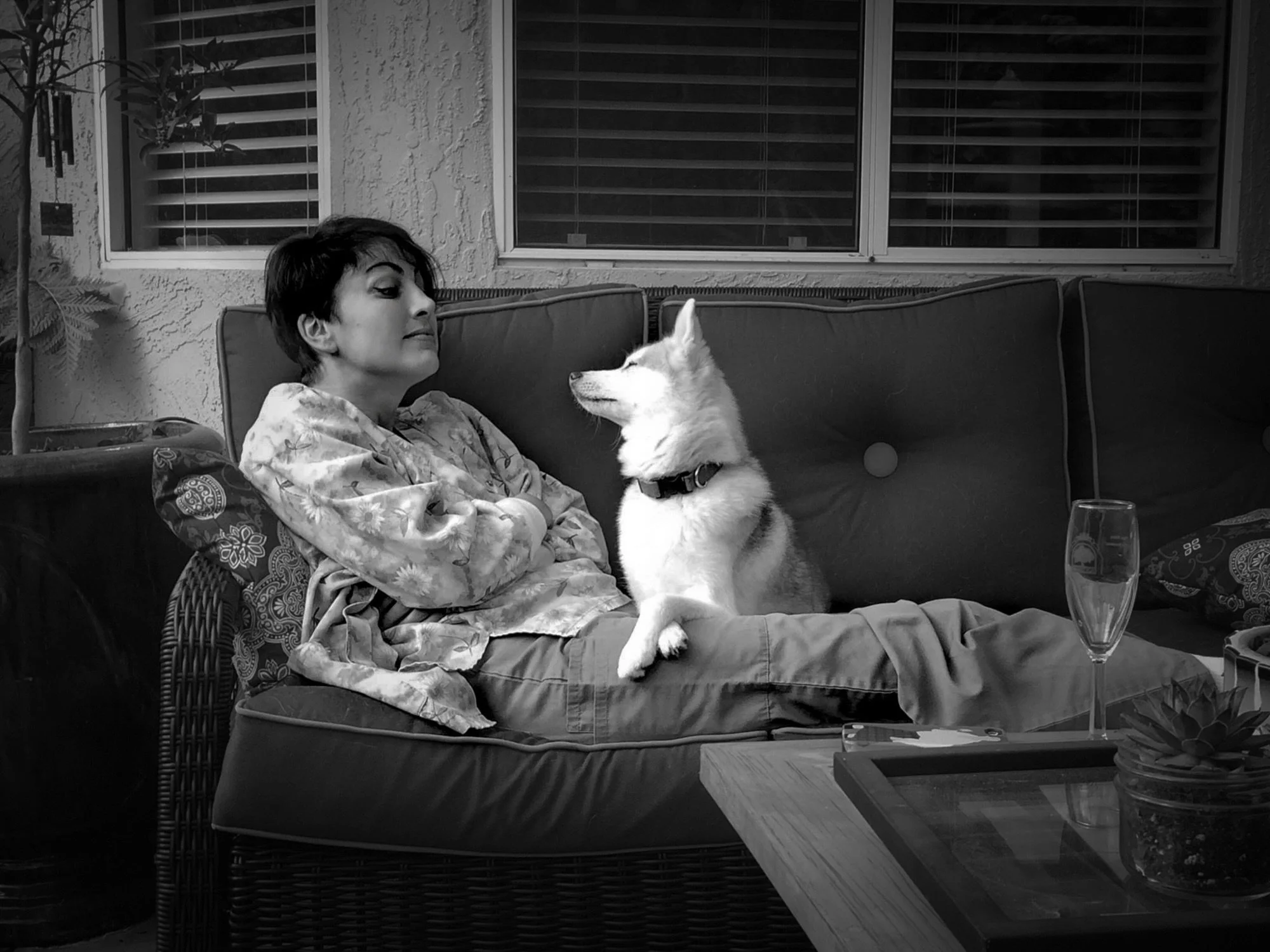
Years ago, my wife, a hospice nurse, came home after a long day at work.
She was exhausted and collapsed on the patio sofa, too tired to change out of her work scrubs. I brought her a chilled Prosecco. Our Alaskan Klee Kai, Nanuk, joined her on the sofa.
The soft, warm patio lights were on.
We sat there, comfortably chatting and enjoying the refuge of our home and garden. My camera was nearby, and I raised it, capturing Nanuk as he gazed lovingly into my wife's eyes.
I'll never forget the love and warmth we felt that evening in the clean, well-lighted sanctuary of our home. Far away from the howling void.
I think the memory of it will help sustain me in my later days.
When I was done with The Hemingway Reader, I returned it safely to our library shelf. I ran my fingers across the many other book titles and soon landed on my wife's replacement copy of Winter's Tale.
Dare I slip it off the shelf and leaf through its aging pages?
I sat in our leather reading chair and opened the book. I'd read the novel years ago, along with many other Mark Helprin novels. But I think Winter's Tale will always rank among his best work.
I thought about the men in the coffee shop and how Joe finds solace in his wife's old hair salon. I thought of Sipsworth and how even a little mouse can bring purpose, meaning, and reconnection into an old woman's life. And I thought of that evening with my wife and Nanuk in our backyard. The moths flitting about the patio lights as we sipped Prosecco and talked about things like husbands and wives do.
I flipped to another page of Winter's Tale and came upon the following words:
“All rivers run full to the sea; those who are apart are brought together; the lost ones are redeemed; the dead come back to life; the perfectly blue days that have begun and ended in golden dimness continue, immobile and accessible; and, when all is perceived in such a way as to obviate time, justice becomes apparent not as something that will be, but something that is.”
Something beyond science tells me that nothing beautiful is ever truly lost. That beyond loneliness and loss and suffering, a healing redemption awaits. A divine reconciliation. That somewhere beyond linear time, there is justice and peace.
Maybe it's a clean, well-lighted place.