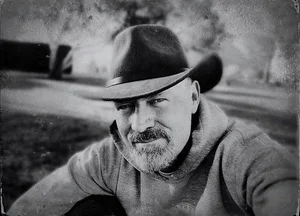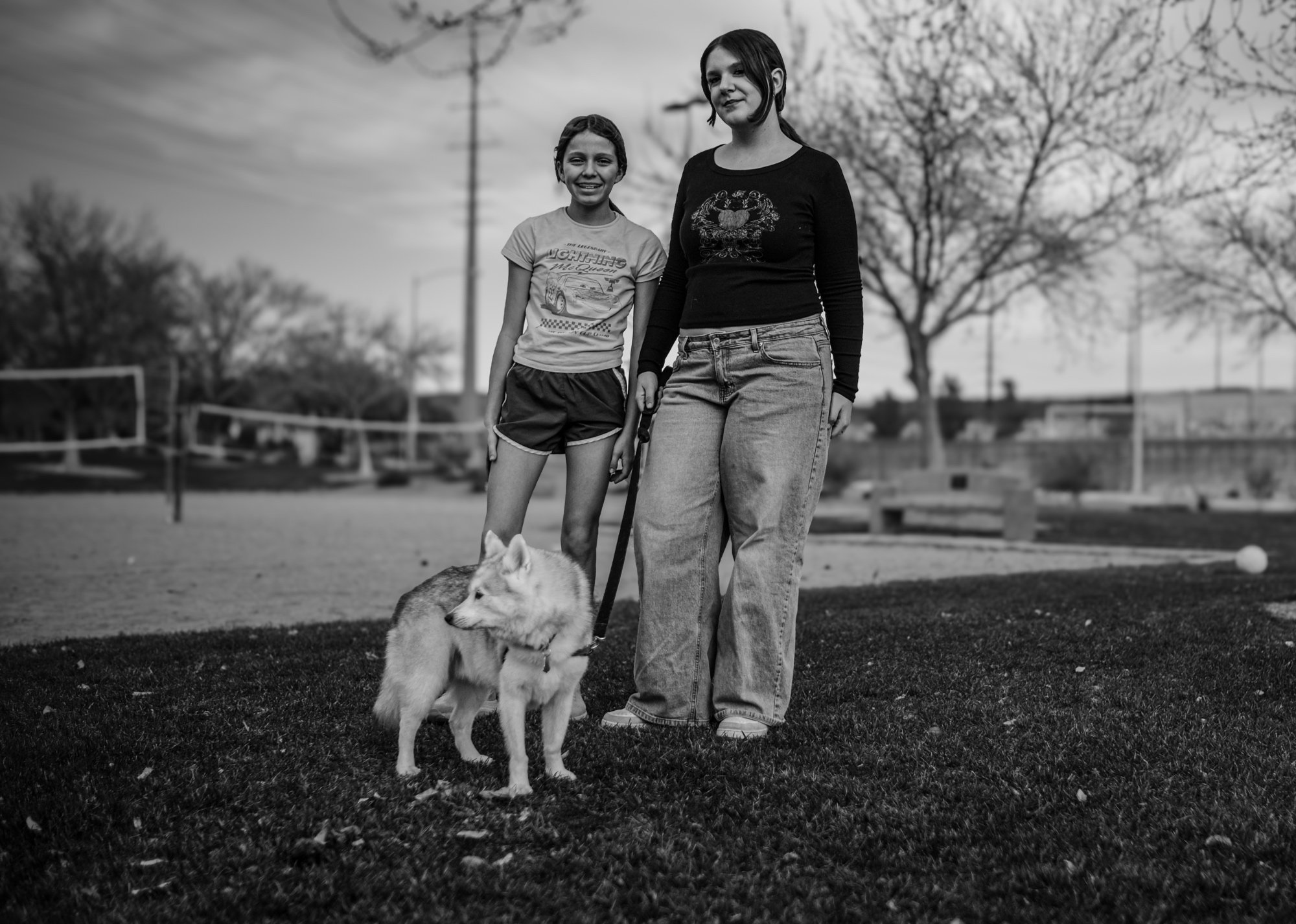
Nanuk and friends in the park. Photograph by John Patrick Weiss
Imagine you’re an old woman living alone with all the usual aches and pains that come with advanced age. You’ve lost your husband and your son and recently moved back to the small English village where you grew up.
You have no family or friends left.
The village has changed. Familiar old shops and pubs from your youth are gone, replaced by modern storefronts. You feel like an alien in your hometown. And yet familiar street corners hold memories of the ones you’ve loved and lost.
You are deeply haunted by the past.
This is the reality for Helen Cartwright, the protagonist in Simon Van Booy’s affecting novel Sipsworth. After losing her husband and son in Australia, Helen returns to her childhood town isolated, deeply depressed, and simply waiting to die. She lives a rigid, solitary routine, devoid of human connection.
Until she meets the mouse.
I was once a shy and introverted little boy.
We lived in the hills of Los Gatos, California where I loved to play in the woods and draw birds in my sketchbooks. Our home was remote, and there were no children nearby except a boy named Steven who lived across the canyon. We became friends and often played together, but beyond that, I spent a lot of time by myself.
I climbed trees and watched wildlife below. Deer silently traversed trails as quail clucked and kicked fallen leaves in search of food. Squirrels eyed me from nearby branches and then returned to their gymnastic games, leaping fearlessly from one bowed limb to another.
But mostly, it was the birds that fascinated and delighted me.
The bold scrub jays squawking at one another and making a ruckus. House finches drunk on small berries growing in dense shrubs beside our home. Humming birds whizzing past me like tiny fighter jets.
How I wanted a bird, a little feathered friend.
Dad and mom rebuffed my requests for a parakeet. I’d show them my bird drawings and promise to care for a pet bird. But my birthday came and went without an avian surprise.
My sister wanted a horse, so maybe that’s why my parents denied me a bird. But a horse, I figured, was a different proposition. Surely a bird was easier to justify than the expense of a horse.
Months passed, and I continued to climb trees and sketch birds.
December arrived. I remember sitting on Santa’s knee at Macys, where my mother had taken us shopping one weekend. Santa asked what I wanted for Christmas, and I said “Sketchbooks.”
I figured a bird was not in my future.
There’s a fellow who runs a YouTube channel called The Functional Melancholic. One of his episodes is titled The World You Knew Is Disappearing.
He talks about returning to a place you haven’t visited in many years, somewhere you once knew very well. Perhaps the neighborhood where you grew up. But when you go back, “half of it is gone.”
The old diner you loved is now a Family Dollar store. Your best friend’s house was torn down and replaced by a sterile, depressing building. You think to yourself, “Wow, what the hell happened here?”
What happened is the passage of time. The inexorable impermanence of things.
When I visit Scotts Valley, where I lived and worked for my entire law enforcement career, I feel mixed emotions. Many familiar places remain, but others no longer exist.
One of my favorite breakfast spots, where I used to enjoy the best buttermilk pancakes, closed years ago. The wonderful owner of my favorite Chinese restaurant retired and moved away. The new owners have a different menu. They no longer offer the amazing shredded chicken salad I used to love.
Thomas Wolfe’s novel You Can’t Go Home Again comes to mind. He got the title from the Australian-British journalist Ella Winter, who told him, “don’t you know you can’t go home again?”
The people and places we love still exist in our memories. But when we visit the old stomping grounds and childhood towns where they once lived, all that’s left are ghosts.
The world is not interested in keeping things the way they were for our convenience and comfort.
Impermanence is the norm.
Late in life, country music legend Johnny Cash recorded a cover of the Nine Inch Nails song Hurt.
Cash’s version is stripped down to little more than guitar and his aging voice. The result is poignant and haunting. The accompanying music video is equally affecting.
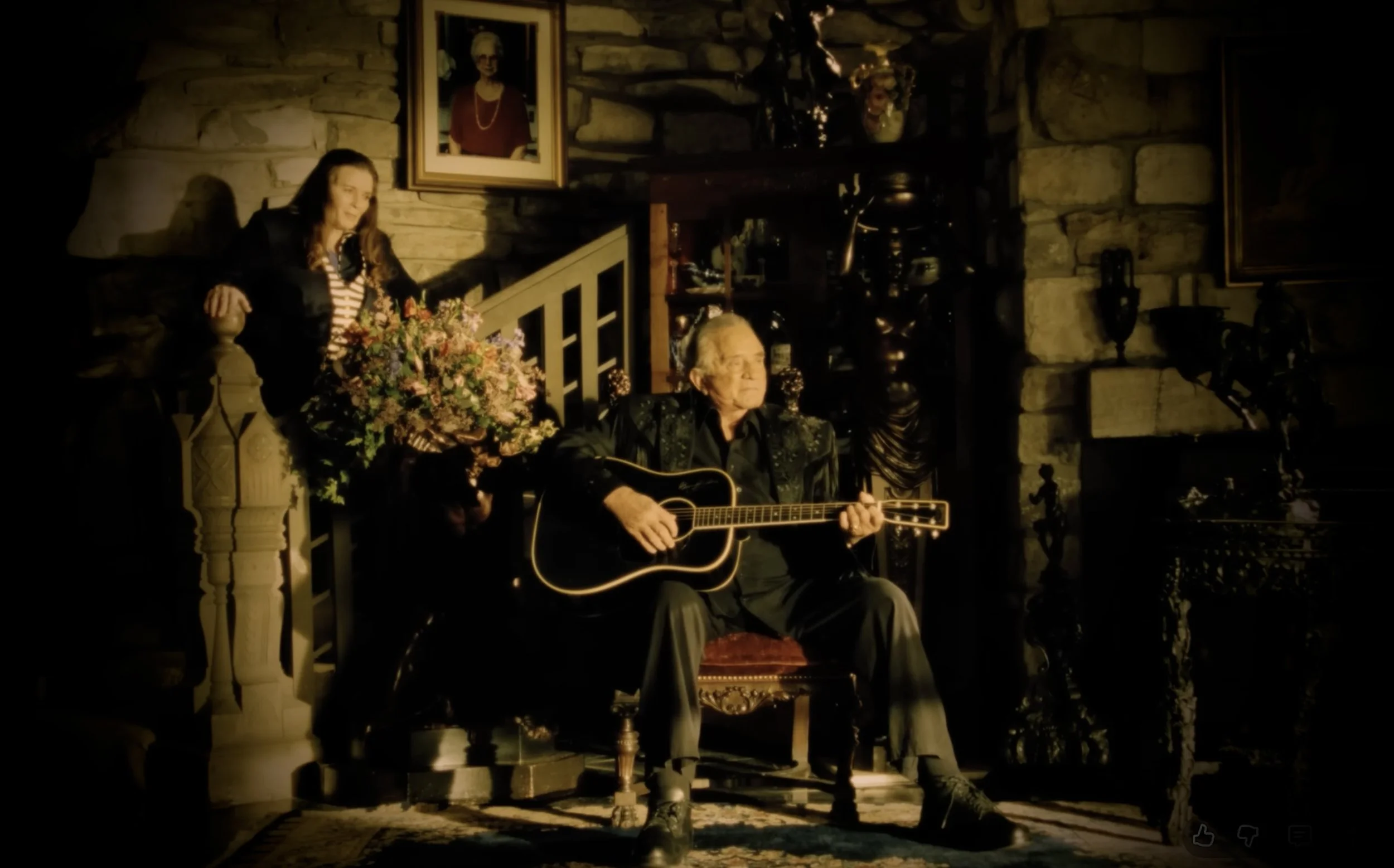
Filmed in early 2003 at Cash's home and the adjacent House of Cash museum in Hendersonville, Tennessee, the video captures the museum in severe disrepair after years of neglect and a flood. Director Mark Romanek used the decaying gold records, tarnished awards, and dusty rooms as a physical metaphor for Cash's aging body and fading health. They also drive home the reality of impermanence in our lives.
Some of the lyrics in Hurt contain the following lines:
I hurt myself today
To see if I still feel
I focus on the pain
The only thing that's real
The needle tears a hole
The old familiar sting
Try to kill it all away
But I remember everything
What have I become?
My sweetest friend
Everyone I know goes away
In the end
Cash’s wife, June Carter, appears in the video on a stairway looking down on him (refer screen shot below). There is profound sadness in her eyes. She died three months later after the video was made, and Cash passed away ten months later.
The first time I watched the video, I had tears in my eyes.
Every time I’ve viewed it since, it still pulls at my emotions. The older we get, the more the truth of impermanence rattles our resiliency. Perhaps the accelerating pace of technology and modernity has made things worse.
The world keeps becoming less and less familiar.
I don’t know if Johnny Cash found peace in those final months of his life. Hopefully, he didn’t believe the lyrics in the song, especially the notion that pain is the only thing that’s real.
Because there are other things, besides pain, that are real. And more importantly, these are the things where we find our greatest peace and salvation.
In Sipsworth, Helen Cartwright finds a mouse in her house. She inadvertently brought him inside when she carried in an old aquarium she found in the neighbor’s rubbish.
The mouse is remarkably calm, curious, well-groomed, and unafraid of her. Helen deduces that he must have been someone’s discarded pet.
She begins feeding and caring for him.
Her desire to die and unrelenting loneliness gradually recede. She breaks her isolation and ventures to a pet shop for advice and to a library for books about caring for a mouse. She names him Sipsworth, and caring for him forces Helen to look outward, breaking the paralysis of her grief and pulling her back into the land of the living.
Her interactions with local characters, like the helpful hardware store clerk, a local librarian, and a veterinarian, begin as purely transactional. But through these small encounters, the townspeople begin to notice her, care for her, and draw her into a community she thought she'd lost forever.
By trying to save a tiny, discarded life, Helen ultimately saves her own.
That Christmas in my boyhood, I went to bed figuring there’d be more sketchbooks and art supplies under the tree.
But the next morning, when I came downstairs into the dining room, there was a strange object hanging from the ceiling by the bay window. It was a circular thing covered with towels.
My parents appeared from the kitchen, smiling.
“Go ahead, Johnny, take the towels off his cage,” my father said.
And that’s when I knew.
I ran over to the cage and carefully pulled the towels away. A young male cockatiel tilted his perky, lemon-yellow head and peered at me quizzically. He scrambled his silly four toed feet left and right on the perch, leaning back and forth in a kind of gandy dance.
I named him Gabby.
He even came with a little book that taught me all I needed to know about cockatiels.
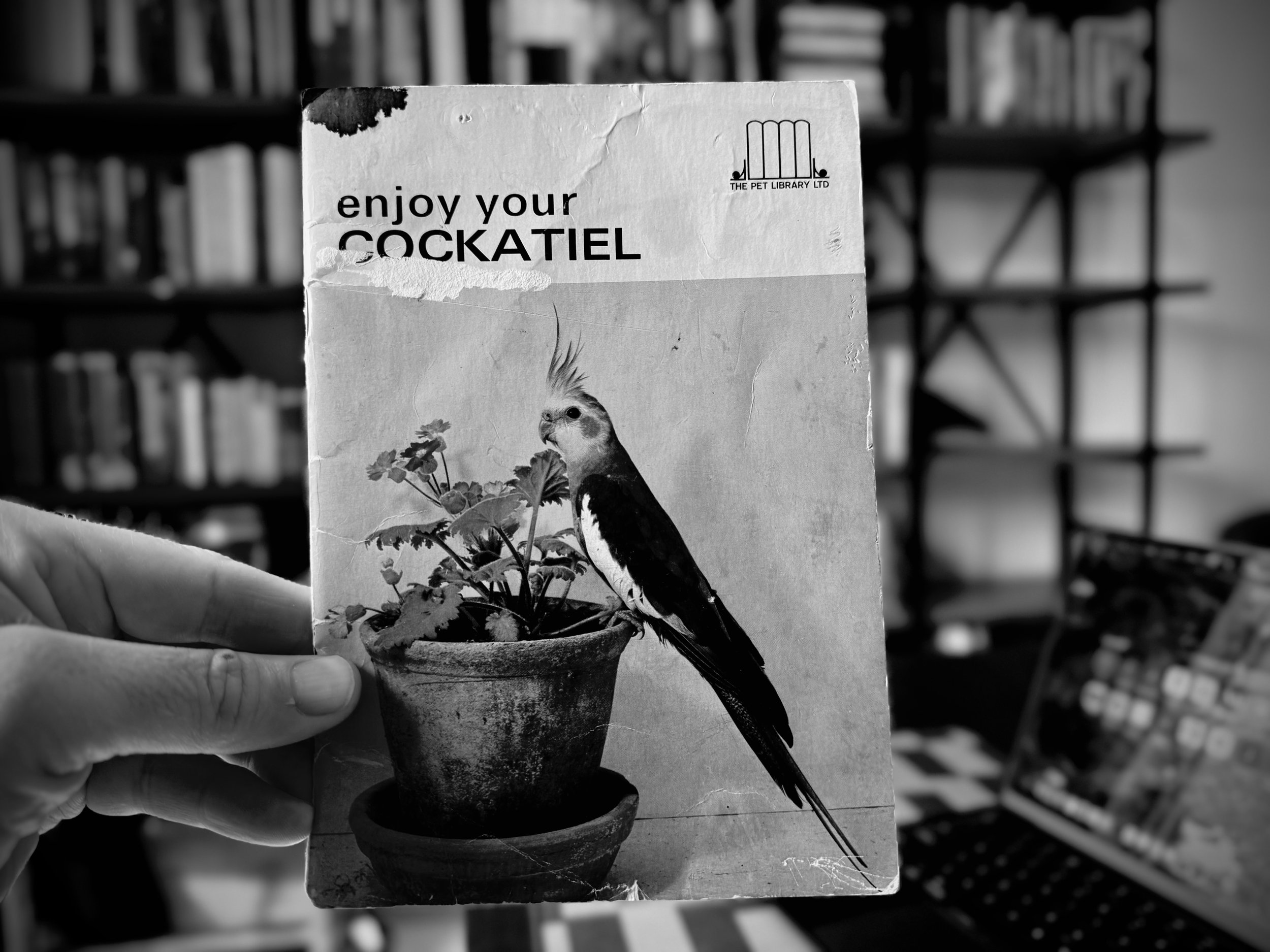
I still own that little book about cockatiels
Gabby lived nearly twenty years, a constant pal from my boyhood into my university years. He taught me about responsibility, about caring for a beloved pet, and about how sometimes my needs come second.
Most of all, Gabby taught me what it feels like to have unconditional love.
It’s understandable why Helen Cartwright felt displaced and alone in the changing landscape of her hometown. Until she met Sipsworth, she was haunted by her memories and the weight of impermanence.
Similarly, it’s understandable why the Functional Melancholic YouTuber laments the challenges of adapting to the modern world. Change is hard. And as we age, we lose the world that remembered us.
We turn to the past, but memories and nostalgia can deepen our isolation and despair. They certainly did for Helen, until that little mouse came along.
Johnny Cash sang about pain being the only thing that’s real, but it’s not true. Love and connection are just as real, and they are the keys to transcending impermanence and loss and despair.
Sipsworth forced Helen to crawl out of herself and become other-focused. My little cockatiel taught me to take responsibility and care for him. Animal companions have a way of doing that.
Now that I’m retired and no longer living in the small community where I worked for twenty-six years, I live a quieter life. My son has moved out to embark on his career, so it’s mostly just my wife and our pets now.
I often take my seventeen-year-old Alaskan Kleekai, Nanuk, to the park. Nanuk may be toothless, deaf, and suffering from arthritis, but he still insists on daily walks. It’s a good thing, because he gets me out of the house and out of my head, where old memories and thoughts of impermanence and irrelevance often dwell.
We drive to the park to commune with nature.
I delight in the noisy grackles and gentle robins hopping about the lawn, listening for worms. I chat with other dog owners and am reminded that there are others, just like me, in this interesting stage of life.
Sometimes I encounter young people who ask if they can pet my dog. I always say yes.
And I think again of Thomas Wolfe’s novel and the following lines:
“All things belonging to the earth will never change-the leaf, the blade, the flower, the wind that cries and sleeps and wakes again, the trees whose stiff arms clash and tremble in the dark, and the dust of lovers long since buried in the earth-all things proceeding from the earth to seasons, all things that lapse and change and come again upon the earth-these things will always be the same, for they come up from the earth that never changes, they go back into the earth that lasts forever. Only the earth endures, but it endures forever.”
Lives and structures may be fleeting, but the collective cycle of existence is eternal. Perhaps when we focus on others instead of ourselves, we reconnect with the vast, recurring rhythms of nature.
Maybe this is how we defeat impermanence, loneliness, and despair.
The leaf falls and the lover passes. But the process of life, decay, and rebirth remains unbroken.
And there is profound peace in that.