A Little Longer
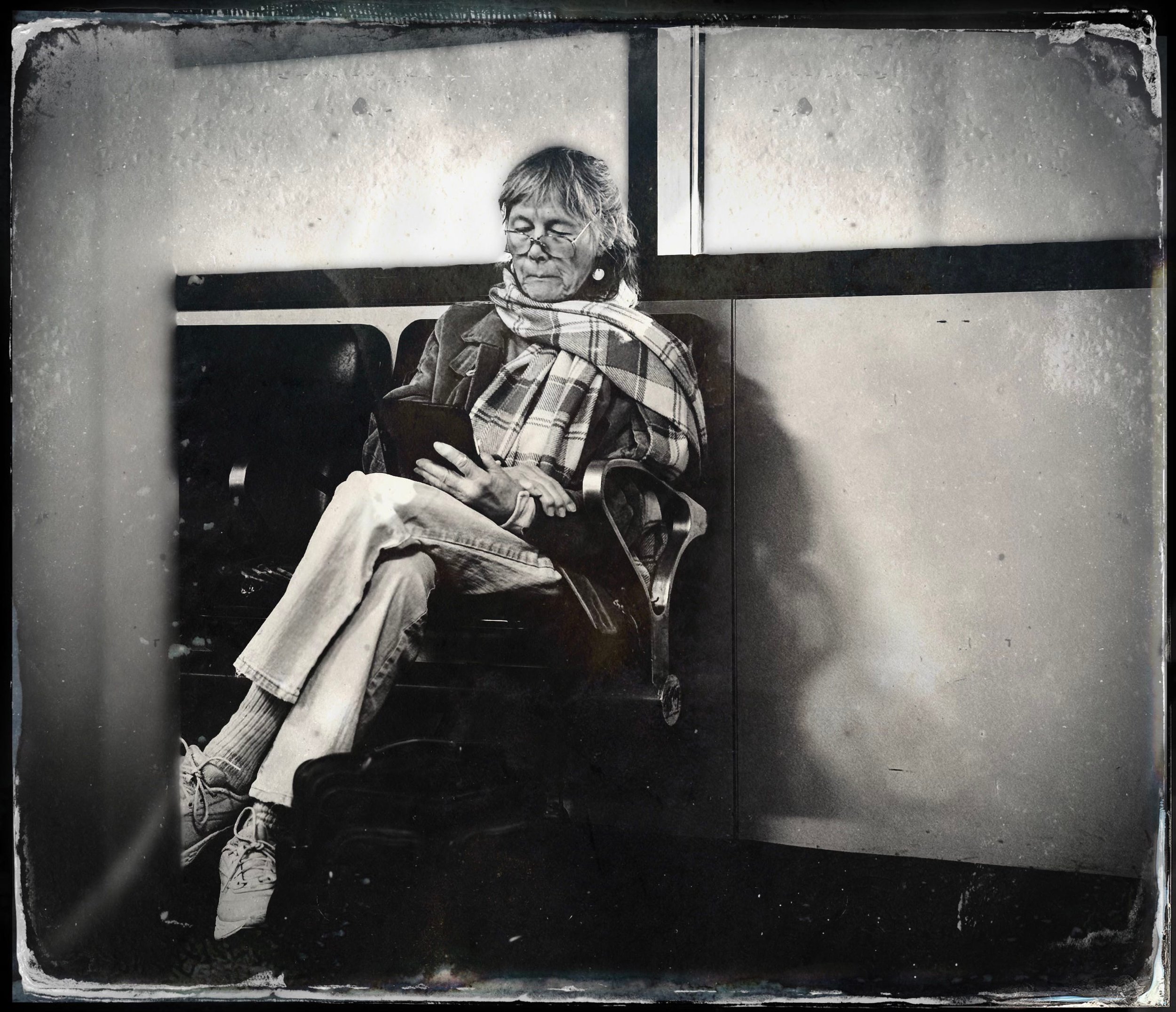
Photograph by John Patrick Weiss
He was at it again. The young man who lived across the street in his parents’ casita was blaring rap music and screaming expletives at the top of his voice. The heavy thumping and animalistic choruses echoed through the neighborhood, invading the serenity of my backyard.
I was sitting in my Adirondack chair, reading a biography of Cormac McCarthy and watching hummingbirds flit about the feeder and the blooming lantana. It had been a long, hot summer, and finally autumn had arrived with its cool temperatures and soothing breezes. These afternoons in my backyard, sipping iced tea and getting lost in literature, had become a welcome respite from the world. Then the music started up again, punctuated by the young man’s f-bomb lyrics.
I’d retired ten years earlier after a long military career, one filled with combat, camaraderie, joys, and sorrows. I never married, saved my money, and bought into a decent little neighborhood. Mostly retired folks, except for my neighbor’s adult son.
He was an odd duck, and I figured he had issues. I often heard the arguments with his parents, whose soft-spoken pleas were no match for his angry eruptions and screaming tirades. They’d built the casita to give him his own space. Or maybe they just needed him out of the house.
I saw him coming and going, sometimes out in the middle of the street racing his remote-control car up and down the pavement. The dude must have been in his late thirties, still playing with toys and living on his parents’ dime. He mostly kept to himself, and I never saw any visitors.
I flipped through the pages of my book, sipped my iced tea, and tried to return to the biography. I came across a line about how “honest arrogance is preferable to hypocritical humility,” which reminded me of the captain I’d deployed with shortly before retirement. That guy suffered no fools and didn’t put up with anything. He could be rough around the edges, but he knew how to navigate all the crap life throws at you. “Always grab the bull by the horns and deal with your problems directly,” he used to say.
The rap music grew louder. More swearing and screaming.
I shut my book, stood up, and walked over to the fence line. From there I could see the casita, and I considered calling the police to complain about the noise. But I hated that. Too many neighbors hid behind the police instead of dealing with their neighbors directly. I heard my captain’s gravelly, war-torn voice in my head. Always grab the bull by the horns.
I tossed my book onto the chair, went inside, and slipped on my running shoes. It was time to pay Mr. Inconsiderate a little visit. I’d pound on his door and tell him we all lived here and didn’t want to hear his crap music and screaming. Maybe I’d suggest blasting opera music his way and singing at the top of my voice. I played a dozen scenarios through my head, each one ending with me making my point in no uncertain terms.
And God help the dude if he decided to challenge me.
I rounded the front of my house and started down the street toward the casita, which seemed to pulsate with the music. The pounding beats and bursts of rhyming syncopation spilled into the street, along with the young man’s guttural howls and strings of expletives.
I figured I’d skip ringing the doorbell at the main house and pound directly on the casita door. His parents were surely out. He waited until they were gone to let loose.
As I crossed the street, I saw Edith McMurray emerge from her front yard and stroll up the driveway toward the casita. I’d spoken with her a few times over the years. She had a rather severe countenance, like an uptight librarian, but she was pleasant enough once you got to know her. She was direct and self-assured, though never in a way that made you feel threatened.
I slowed my pace. Why not let Edith have first crack at this nutty young man?
I lingered by the cluster of neighborhood mailboxes, pulled out my key, and pretended to check my mail. Edith knocked on the casita door. It took a minute before the door swung open.
The dude looked exactly as I’d imagined. Pajama pants, stained tank top, uncombed hair, and an unshaven face. He held a beer bottle in one hand.
Edith said something, but he raised a forefinger and disappeared into the casita. A few seconds later the music stopped, and he returned to the doorway. I was close enough to hear their conversation.
“Oh, hello, Daniel. I’m sorry to interrupt you. Do you have just a minute? I wanted to ask you something.”
“Sure, Mrs. McMurray. What’s up?”
“I’ve been meaning to ask you about that little electric car you have. I see you zipping it up and down the street.”
I hadn’t known the dude’s name was Daniel. His eyes lit up when Edith mentioned the car. He disappeared inside and returned with the toy and its remote control, eager to explain how it worked. He showed her where the batteries went and how the remote control worked. Edith watched with apparent interest, asking where he’d bought it and whether it had been expensive.
“I have a grandson, you see,” Edith said. “He has a birthday coming up, and I wondered if something like your speedy little car might please him.”
This seemed to animate Daniel even more. Soon he had the car running, zipping it up and down the street while Edith watched. Then he handed her the remote control. She held it awkwardly and did her best to steer, but the car shot toward the curb and crashed. They both laughed.
Somewhere in their conversation, Edith mentioned that her husband was recovering from surgery and that she’d been tending to him. They’d been enjoying the fall weather in their backyard, she said, and they liked music too. Unlike Daniel’s fancy sound system, though, she plugged her iPhone into a little speaker and played classical piano music for her husband. It soothed him.
She pointed toward her house. “See that umbrella? That’s where our backyard is. You should come by sometime for a Coke, and I’ll show you the little koi pond we built.”
Daniel smiled and nodded. Edith thanked him for telling her about the car and said she thought something like it might make a nice gift for her grandson.
They spotted me standing by the mailboxes, and I gave them a little wave. They waved back.
I decided to stand down and see what happened after Edith headed home. She gave Daniel a hug, and he held on to her a little longer than people normally do. She patted him on the back, thanked him again, and strolled toward her house.
I returned to my backyard and settled into my chair. I figured the music and profanities would start up again soon enough. When they did, I’d march over there, pound on his door, and give him a serious piece of my mind.
But the casita remained quiet as a monastery.
Two weeks later, I was at the airport waiting to catch a flight to Washington to spend the weekend hunting and fishing with some old Army buddies. I spotted Edith sitting nearby, reading an e-book while waiting for a flight of her own.
“Hi, Edith. How are you?” I asked. “It’s Doug, your neighbor up the street.”
“Oh yes, hello, Doug. How are you?”
We chatted for a while. I asked what she was reading, and she told me it was a Wally Lamb novel about a man who accidentally runs over his infant son.
“That’s terrible,” I said.
“Yes, it is. He ends up in prison, and things get worse for him.”
“Sounds kind of depressing.”
“Well, yes, but it’s also about memory, grief, self-forgiveness, and redemption. I read it last year but decided to read it again.”
“I’m more of a Cormac McCarthy fan myself,” I said.
“Yes, he’s quite a writer. But too much darkness and nihilism for me. I prefer a little more hope in my literature.”
We continued to chat. She was on her way to California to visit her sister, and I told her about my hunting and fishing trip. A little boy carrying a stuffed bear ran past us toward his mother, who was seated nearby.
“I saw you talking with the neighbor’s son a few weeks ago when I was getting my mail,” I said. “I overheard you mention your husband. How’s he doing? Feeling better?”
She told me he was much better now.
“So, did you ever get a remote-control car for your grandson?” I asked.
She smiled a guilty little smile.
“We don’t have any grandchildren.”
This story is a work of fiction
I’m honored to have a community of people who value what I do. Your support makes my work possible. Donations appreciated via secure PayPal or Ko-fi.