We have grown terrified of the unmediated hour
Photographs by John Patrick Weiss
You carry the black rangefinder out into the afternoon glare. Past glass storefronts and concrete walkways where the world’s commerce hums unending. The camera hangs close to your hip as you walk, not to buy or be seen, but to escape inner thoughts and get beyond yourself.
There are people moving in clusters. Mothers and daughters comparing fabrics, a couple leaning over coffee cups in the slant light of a café window, people trading words as they carry paper bags toward the parking lot.
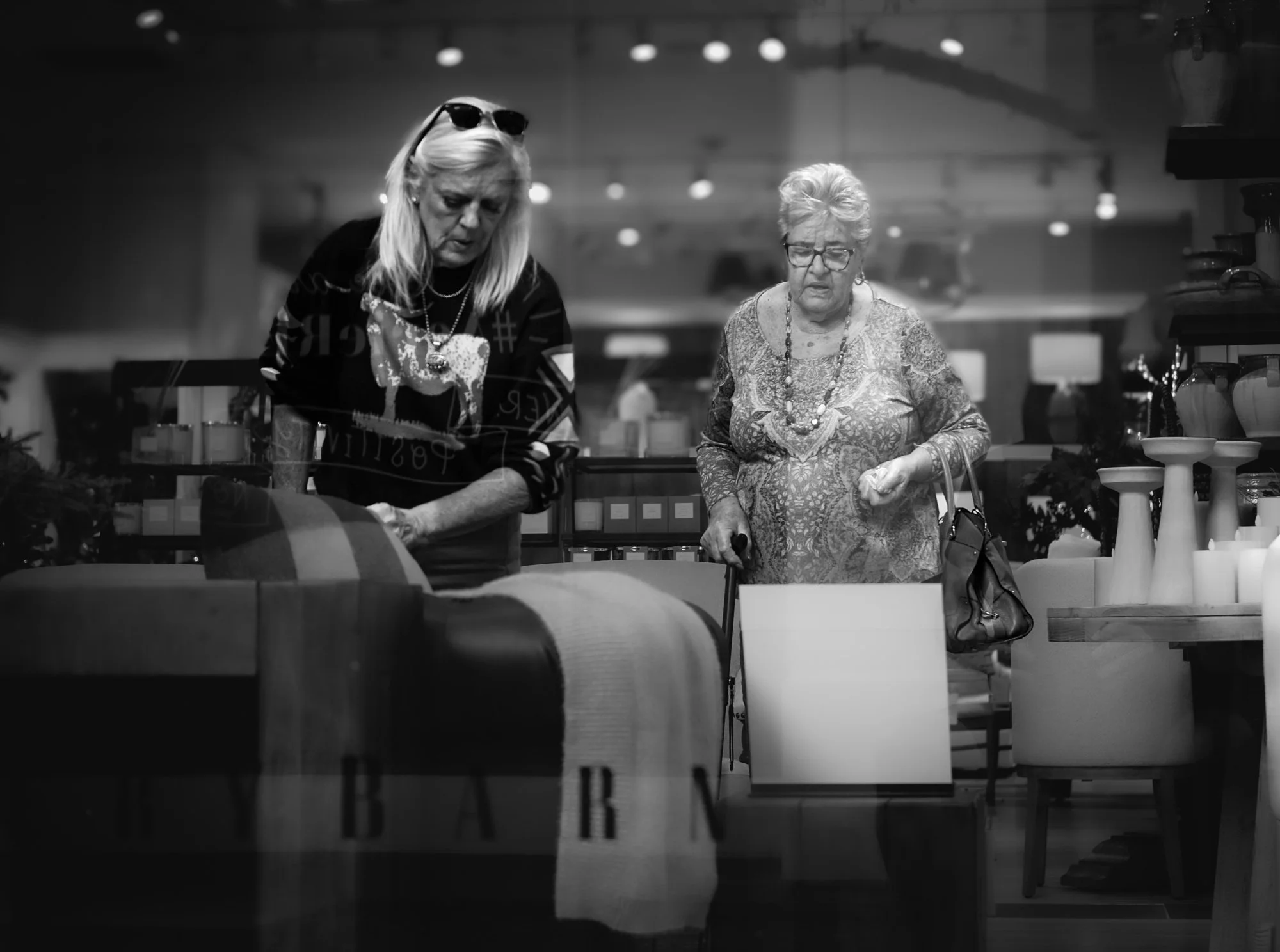
Looking at the images on the camera screen, you see the human choreography. Friends gathered around a table, shoppers chatting as recent purchases swing from decorative bags, and dogs tethered to leashes lead their owners to other dog walkers.
We are built for the herd. We need the warmth of another voice, the shared weight of a burden, the reassurance that someone else bears witness to our days.
And then there are the solitary ones.
Not the lonely, necessarily, and not the ones bent over glowing screens. Those people are not alone. They are tethered by invisible wires to a thousand distant rooms, swallowed whole by the absorptionist quicksand of digital distraction.
They’re trading the tangible world for a palimpsest of it.
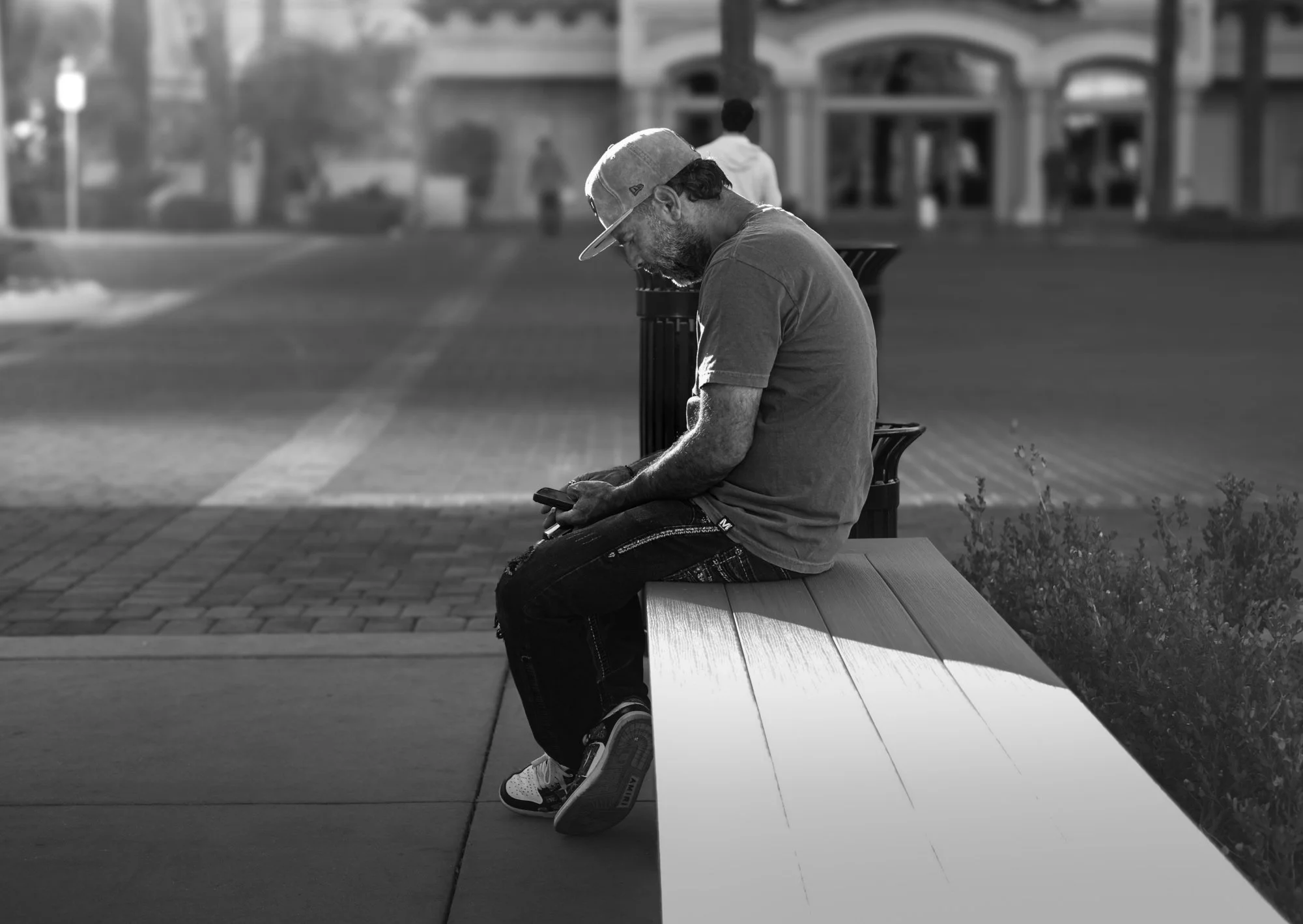
The ones who stop you in your tracks, who stand out from the distracted herd, are unapologetically by themselves. Doing nothing. Going nowhere in particular.
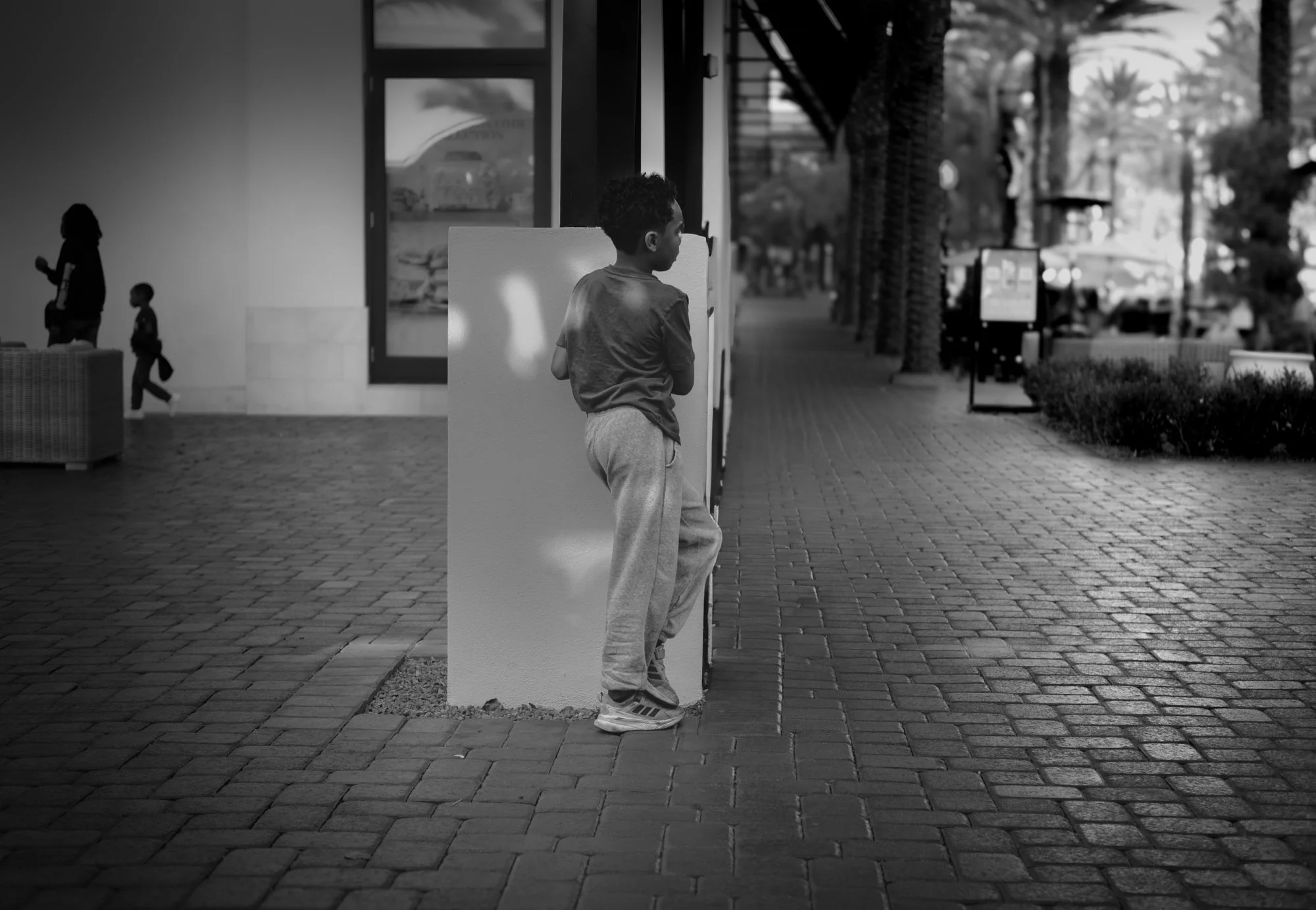
On a recent walk, among hurried shoppers and chattering pairs, there was a boy standing alone beside a concrete bollard. No parents in sight. Perhaps they were inside a doorway, shopping. The boy had no phone in his hand and no urgency in his posture. He simply stood there in the vast architecture of the plaza, watching strangers go by. After a moment he crouched down, picked up a dry leaf from the concrete, and turned it over in his fingers as if it were a lost artifact.
You raise the viewfinder to your eye. The shutter clicks its mechanical finality, and you wonder what unhurried thoughts were moving through the boys’ mind.
It takes you back to the woods of your youth, before the noise of the world, when you slipped alone into the trees, carrying nothing but a sketchbook or nothing at all. Just your eyes and ears and bare hands.
You remember the rough, furrowed ridges of old bark beneath your palms, the startling softness of pale green lichen clinging to shadowed trunks. You remember long, unbroken afternoons where nobody wanted anything from you and you wanted nothing from them. In that stillness, the mind did not wither, it expanded. It learned how to observe, to weigh the world without needing an audience to validate the seeing.
We are losing that art, and we scarcely notice the theft.
We have grown terrified of the unmediated hour, of standing in the clearing with nothing between our skin and the wind. We mistake constant connection for community, forgetting that a man who cannot bear his own company has very little substance to bring to the company of others.
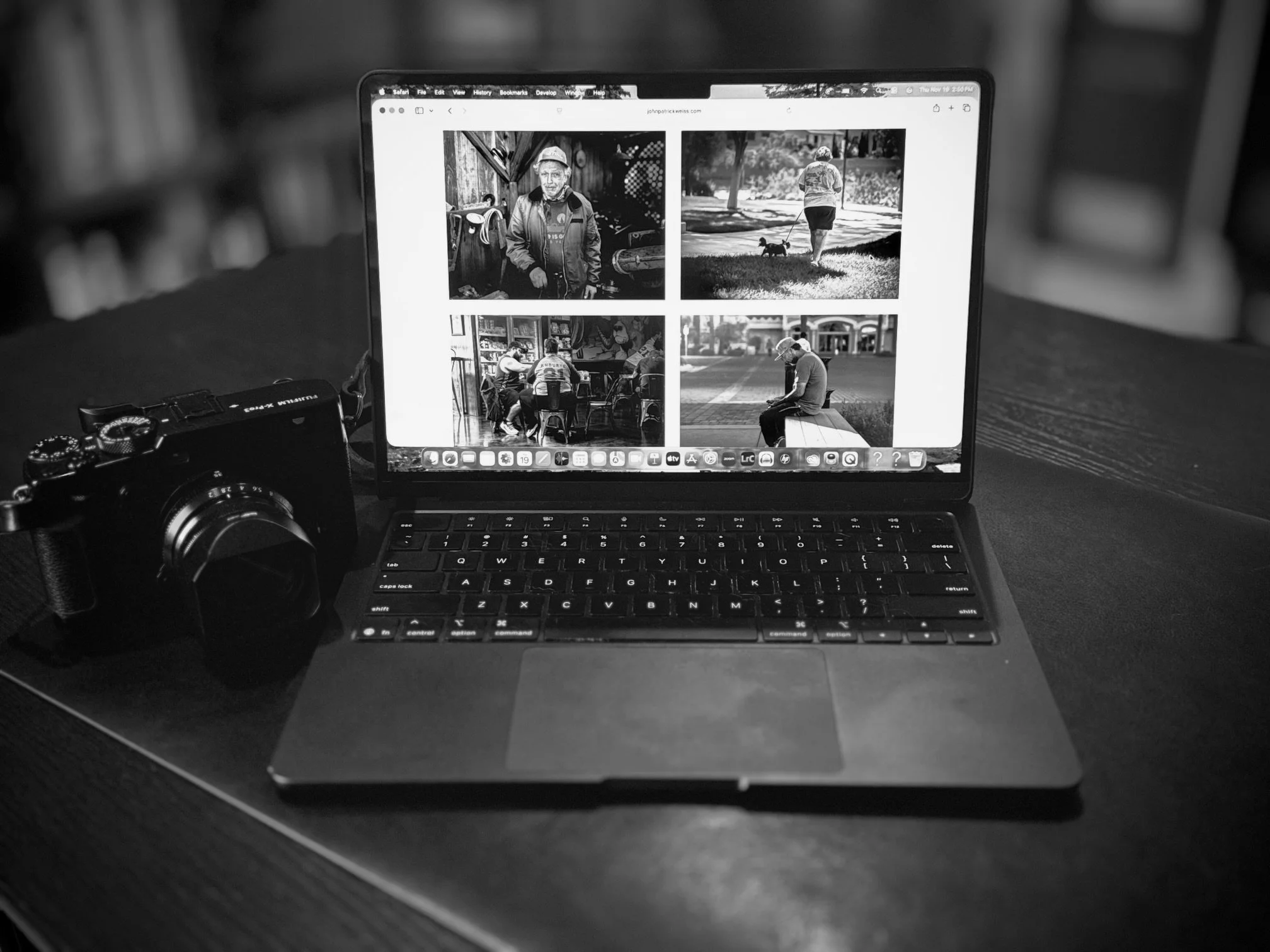
Back at the desk, the rangefinder rests beside the open laptop, two instruments of looking. The photographs on the screen are testimonies. They remind you that while we walk together through the brief, bright days of life, our deepest understanding is forged in the clearing.
Where we stand alone, attentive, turning a fallen leaf over in the light.